
The journal of the True Testament Assembly
Studies in Marcionite Christianity, Canon, and Origins. Edited by W. C. Muenchow IV
Topic
The Two Gods
24 articles, newest first
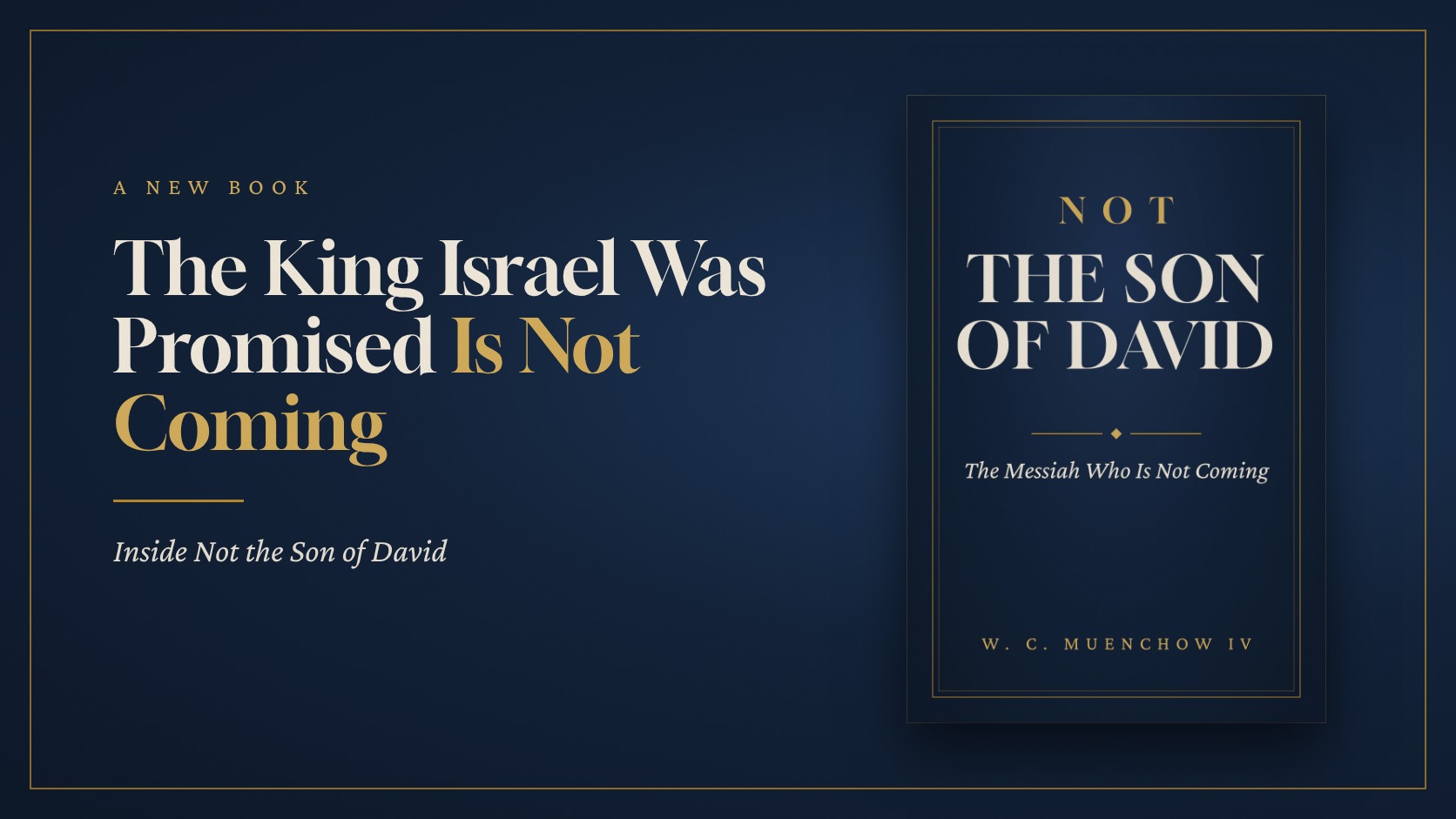 The King Israel Was Promised Is Not Coming: Inside Our New Book, Not the Son of DavidOur new book, Not the Son of David: The Messiah Who Is Not Coming, argues that Jesus was never the king the prophets promised Israel, and that the king they promised is not coming. This is a guide to its case: the title Jesus kept refusing, the five reasons drawn from Jesus and Paul, the church’s strongest replies, and what it all means for Israel and for you.Nov 17
 The Last Thought in the UniversePhysicists have worked out how this universe ends. The stars burn out, the black holes evaporate, and in the cold that follows there is no energy left to think with, so even faith, as the act of a living mind, has a last moment. This article sets that ending beside the Father of the Evangelion, who did not make this universe, does not run on its energy, and does not need us to keep holding on in order to keep us.Nov 13
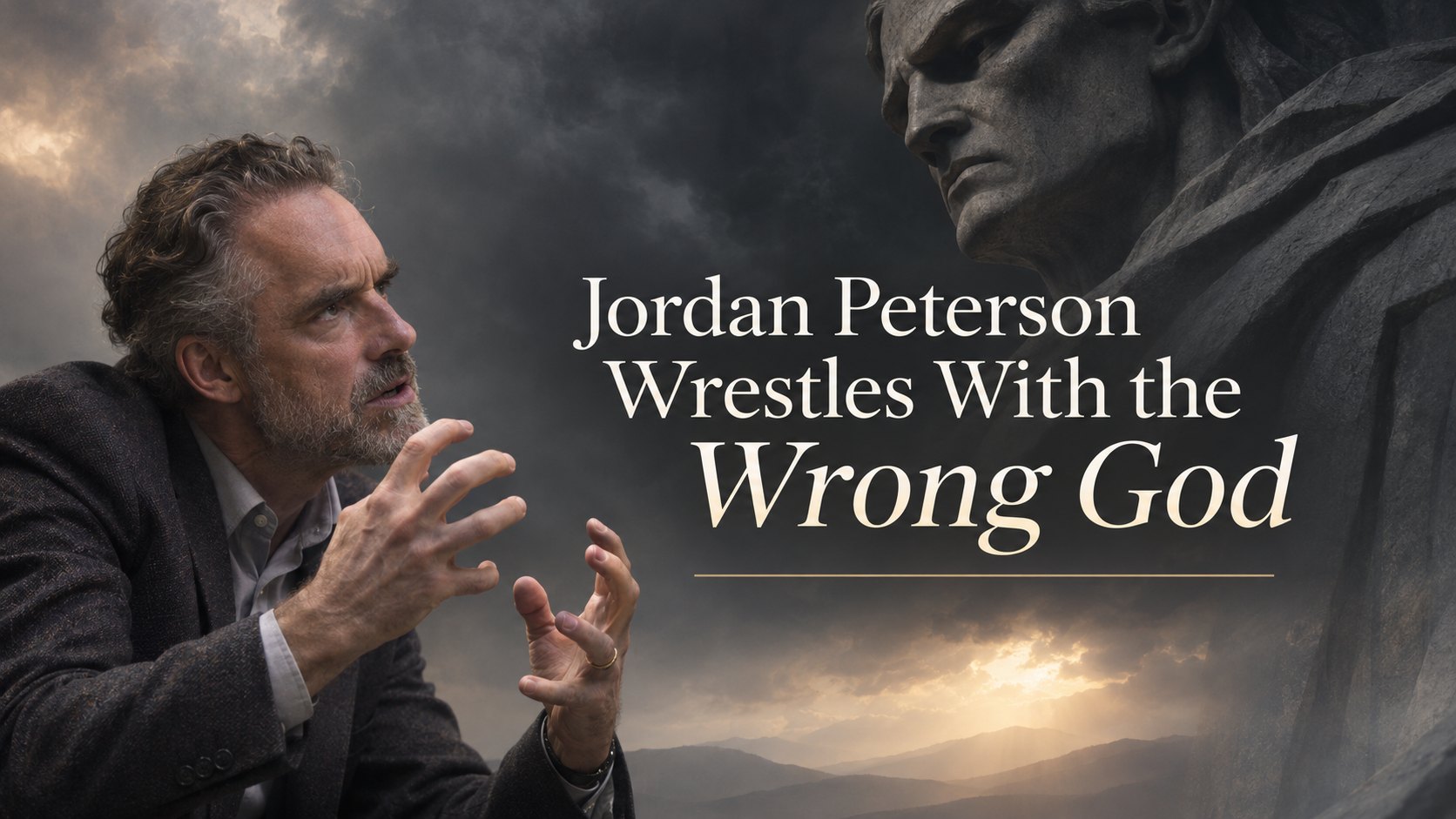 Jordan Peterson Wrestles With the Wrong GodJordan Peterson's We Who Wrestle with God reads Genesis and Exodus with real insight into the God of order, Law and sacrifice. That is exactly the problem: the God he describes is the Creator, and the Father Christ revealed was never in those books at all.Nov 10
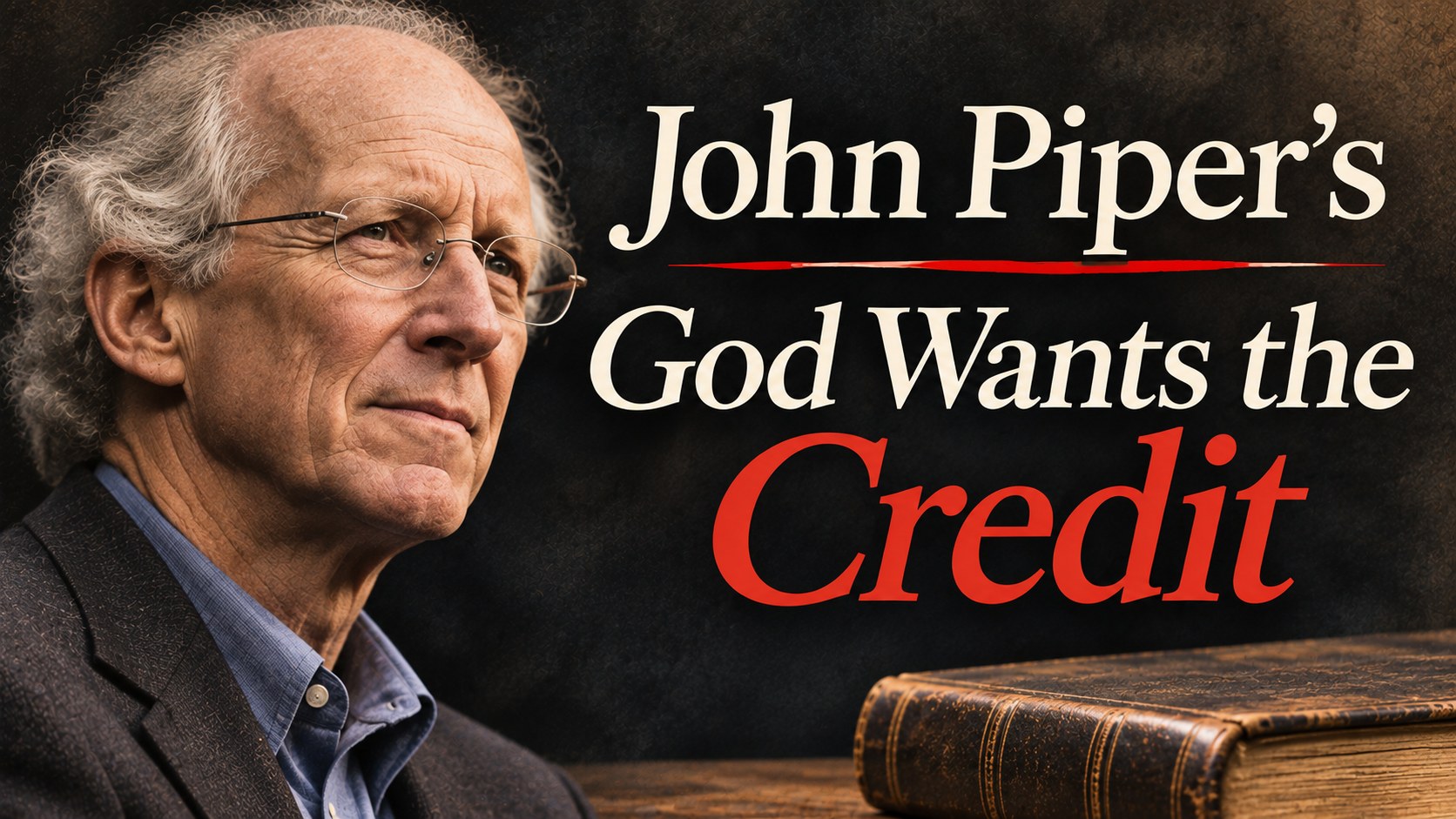 John Piper's God Wants the CreditJohn Piper teaches, more honestly than most, that God governs every calamity for his own glory: the night the 35W bridge fell he told his daughter God had a purpose in letting it fall. Marcion read the same God in Isaiah 45 and agreed with the description. What he denied was the name. This article grants Piper's reading of the Creator, shows that the texts his system leans on, Luke 13:1–5, Romans 9 and Romans 11:36, are not in our edition, and sets his God beside the Father of the Evangelion, who is kind even to the ungrateful and the wicked.Nov 4
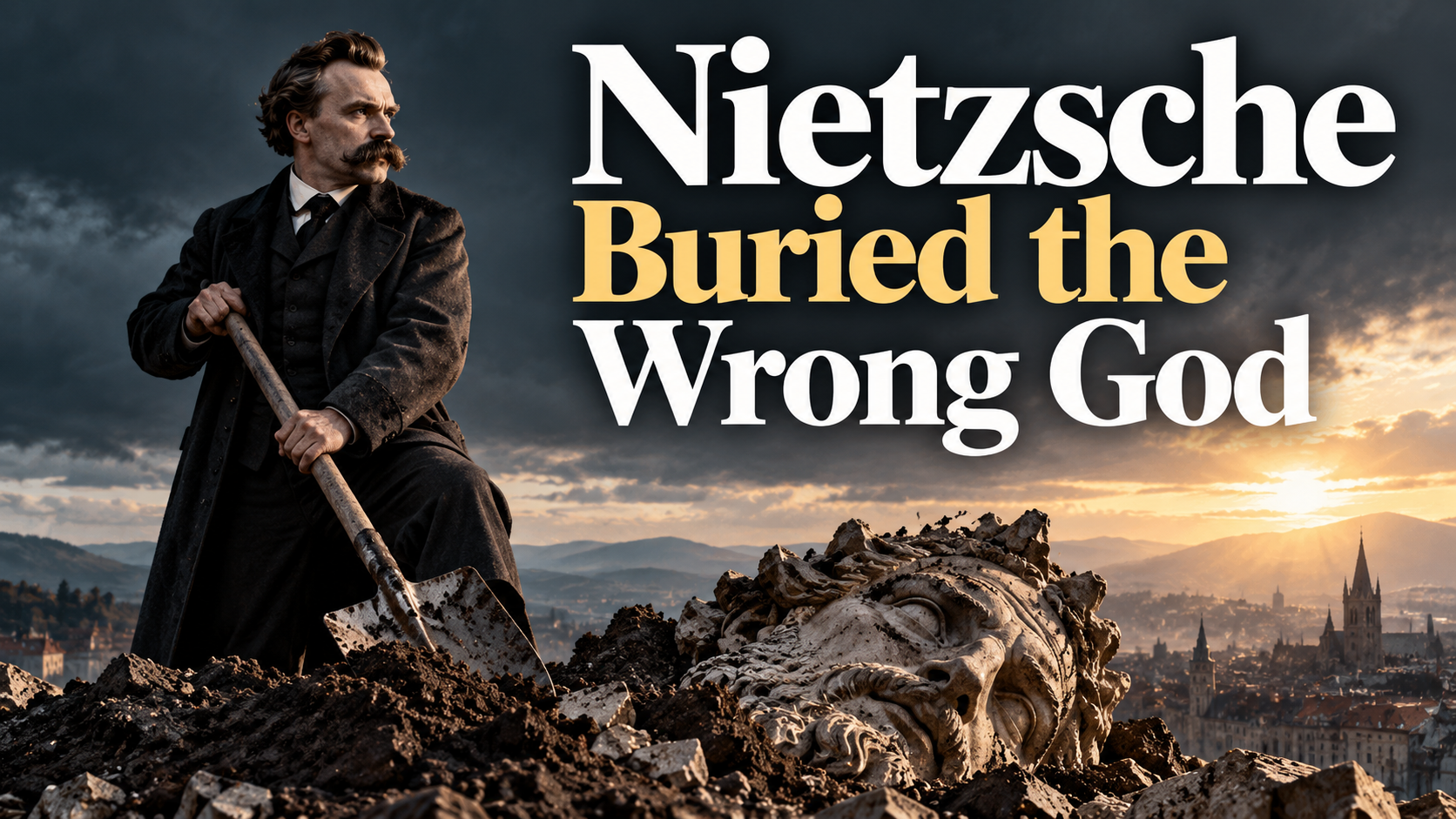 Nietzsche Buried the Wrong GodNietzsche announced that God is dead but never asked which God. The God he buried was the Law's hard, vengeful judge, a God Marcionites also reject. He then worshipped that same God's world, and never heard of the Father whose goodness was the very standard he used to condemn the old God. He was right that the old God deserved to die, and wrong that there was no other.Oct 22
 Does the Good Father Really Bless Your Country?In country after country, speeches end by asking God to bless the nation, and anthems ask him to save it. The prayer sounds harmless, and the people who say it usually mean it kindly. But it assumes something about God that the Evangelion does not teach. Blessing a nation for its obedience, guarding its borders and healing its land is the Creator's covenant, and the Hebrew scriptures teach it openly. The Father whom Jesus revealed does something else. He is kind to people in every nation, including the ones at war with yours, and he gives his kingdom to a little flock that belongs to no country at all. This article sets the two side by side and asks what a Marcionite should pray instead.Oct 20
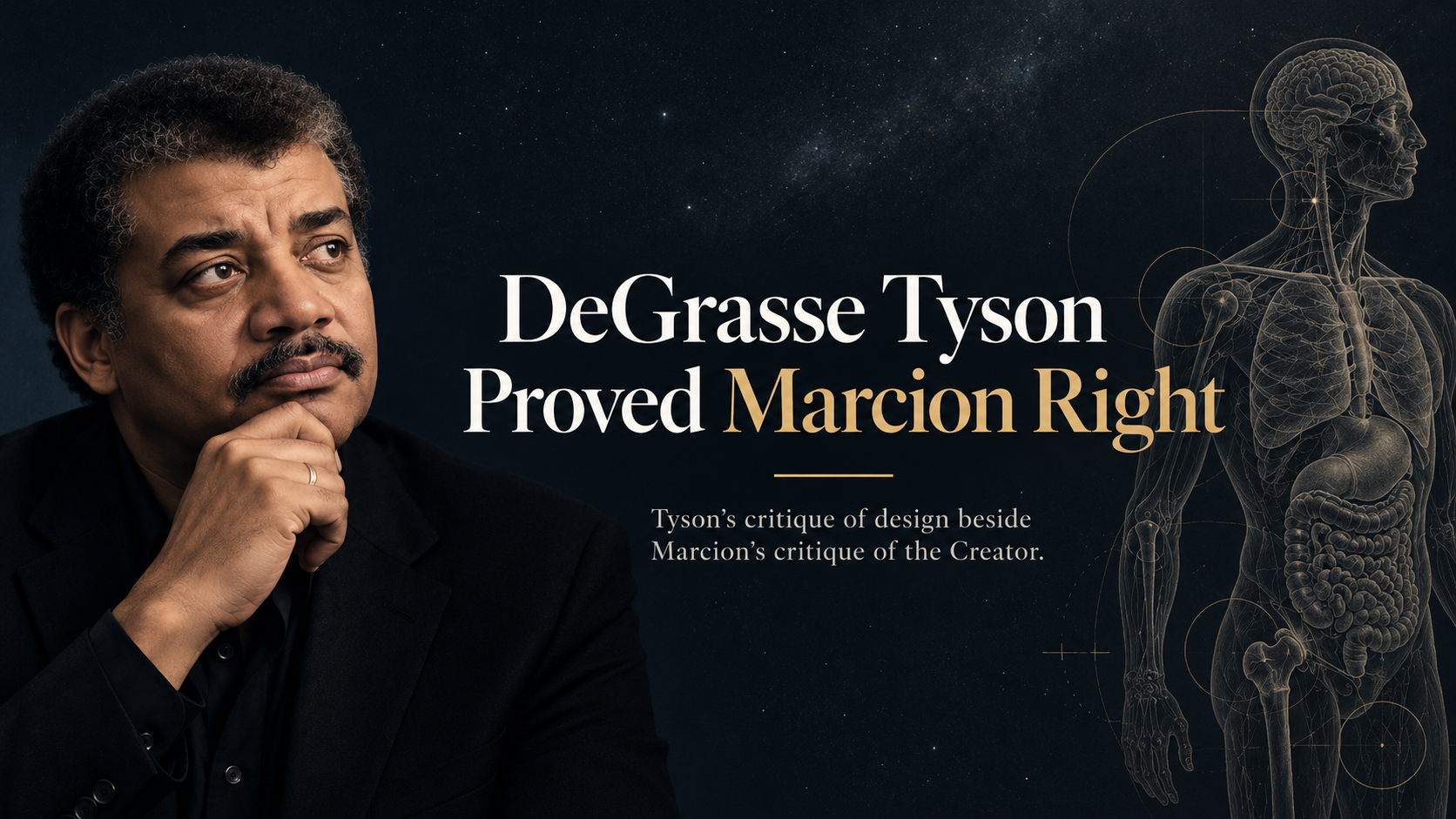 DeGrasse Tyson Proved Marcion RightIn 2005 Neil deGrasse Tyson wrote an essay against intelligent design. Along the way he made a case that the universe is a violent place and the human body is poorly built, and he joked that "stupid design" could be a movement of its own. Eighteen hundred years earlier, Marcion's followers made the same complaint about the Creator's work, and Tertullian answered them with the same argument from design that Tyson was attacking. This article sets the two debates side by side. Tyson's evidence is good, and I accept it. His conclusion assumes the one thing Marcion denied: that if there is a God at all, he must be the one who made this world.Oct 18
 What the Creator Knows About The FatherThe Creator has never met the Father. No one has, except the Son and the people to whom the Son reveals him. So what does the god of this aeon know about the God who has been emptying his house for two thousand years? The text answers: he knows the damage. He knows something entered his domain that he did not send, that his rulers killed it and lost, that it did not stay dead, that a light is now shining that is not his, that his prisoners are being transferred out, and that his own clay is calling someone else Father from the inside. What he does not know is who. This is a personal piece, because I used to be one of the prisoners, and I have thought a long time about what the jailer learned on the day I left.Oct 16
 The Blinding God of 2 Corinthians 4One sentence of Paul says that the god of this aeon has blinded the minds of the untrusting so that the light of the Evangelion of Christ's glory might not shine to them. Marcion read it as written. For eighteen centuries the Imperial Church has not been willing to. Irenaeus moved the words. Tertullian moved the words, then said the devil was meant, then in the same chapter called the Creator the God of this age. Augustine, answering a Marcionite book in Carthage around 420, moved the words again and then said plainly that the true God does blind minds, by a judgment "most just though most hidden." This article sets the three readings side by side in their own words, Tertullian and Augustine in their own Latin, shows what each one concedes, and gives ours.Oct 16
 James White Already Believes in Two GodsNobody beats James White on Calvinism, because everyone who debates him on predestination grants his premise before they start: that the God who hardens Pharaoh is the Father of Jesus Christ. This article grants his exegesis instead. The Creator does decree, does harden, did prepare vessels for destruction, and White is right about all of it. What it denies is the identification. The church's one full defense of the Creator against Marcion, Tertullian's Book Two, rests on free will, bare permission, and a Pharaoh who deserved his hardening. White rejects all three in print, so every debate he has won against an Arminian is a debate Marcion wins against Tertullian. The article sets the 1689 Confession's two glories beside Tertullian's two gods, answers secondary causation and the appeal to the cross, and closes with a resolution White has never had to defend: the God who hardened Pharaoh is the Father of Jesus Christ.Oct 12
 When the Creator Is SeenMost Christians picture the end as a series of arrivals: a rapture, a tribulation, an Antichrist, a throne in Jerusalem, a final sorting. Our end turns on something being seen. Paul says the god of this aeon has blinded minds so that the light of Christ might not shine, and the end is that blindness lifting. We hang the whole order on one event, the revealing of the person of fault, whom we hold to be the Creator. Christ is the image of the invisible God, and no one can recognize the Father’s image while the Creator still passes for the Father. So the false god must be seen before the true Son can be. This article walks through the order step by step: the blindness, the first crack, the defection, the revealing, the Son seen, the fire that makes every work manifest, the closing of the aeon, and the reconciliation of all things. It also draws on Tertullian, who reports that Marcion read the god of this aeon as the Creator.Oct 10
 The Emmaus Road Without MosesIn canonical Luke, the risen Jesus walks the Emmaus road, opens Moses and the prophets, and shows two disciples that the scriptures were about him. The whole habit of finding Christ in the Old Testament rests on that scene. The Evangelion has the road, the stranger, the rebuke and the broken bread, but no Moses and no prophets. Jesus calls them slow of heart “to trust all that he told you” (Evangelion 16:22 TT) and holds them to his own words about his suffering. This article sets the two texts side by side and shows what Tertullian’s quotation of the passage reveals. It then traces how the True Testament, from the synagogue at Nazara to the last command and Paul’s own summary in 1 Corinthians 15, never presents Jesus as fulfilling the Creator’s books.Oct 9
 Two Messiahs: The Christ Who Came and the One the Creator PromisedMarcion taught two Christs because there are two Gods. The Creator promised Israel a Messiah, a son of David who would restore the kingdom. The Christ who descended into Capernaum was sent by the unknown Father for all nations and carried none of that promise. This article sets out three witnesses to that teaching. Tertullian states it five times as common ground, and the Dialogue of Adamantius shows Marcionites still pressing it. Ritschl, Baur, Zahn and Harnack, reconstructing Marcion's gospel, found no Davidic descent, no Jewish Messiah, and a Christ who will not profess the title at his trial. The Evangelion itself shows Christ silencing the title, asking how the Christ can be David's son, refusing a timetable for the kingdom, and warning his own against anyone who says "I am the Christ." The article then sets out the order of the end as we hold it: the defection, the revealing of the person of fault, whom we identify as the Creator, and a Creator's Messiah who never arrives because his promise ends with his aeon. It answers three objections to reading the person of fault as the Creator. It closes with Tertullian's own confession of a thousand-year kingdom in Jerusalem, and asks which Messiah Christian Zionism is waiting for.Oct 7
 The Creator's Signature: What Marcionites Say About Creation and EvolutionThe True Testament contains no creation account. The word "creation" appears in our scripture only for the Father's work in a person, and our Colossians never names Christ as the maker of all things; Tertullian himself says Marcion's god "created nothing." The world was made by the Creator, the god of this aeon, and Genesis is his own book about his own work. We read it with interest and without obligation, so the fight between a young earth and an old one is a quarrel inside the Creator's house that we are not party to. Evolution threatens nothing we hold and confirms what Paul said: the Creator's order is sown in decay and passing away, built on a system in which mass death is the price of operation. Death before Adam is no scandal to us, because Adam in our scripture is shorthand for the perishing material order. Darwin described the Creator's signature. Humans are animals of this house, wholly the Creator's work with no divine spark in them, until the Spirit is given from outside the aeon. We do not call the world evil, we do not hate it, and we do not treat science as an enemy. The Father does not repair any of it. His only creation is the new creation in a person, and his rescue is extraction, not renovation. The Imperial Church has to explain how a good Father built a world on billions of years of death. We never said he did.Oct 7
 Did Jesus Pray to Yahweh?Everyone assumes Christ prayed to the God of Sinai under a warmer title, and commentators state it as background rather than as a claim. This article inventories all ten prayers of Christ in the Evangelion in the Greek our translation works from. He prays constantly, never names the Creator, never addresses His covenant name or sanctuary, and tells His own disciples that this Father was unknown until He arrived.Oct 1
 Everything Is Backwards: Conditioned Desire in the Creator’s WorldHuman beings do not enter the world as neutral observers. We are born inside an order that has already defined strength, success, justice, freedom, and desire for us. Paul describes this condition as enslavement under the elements of the world, walking under the ruler of the power of the air, and blindness imposed by the god of this aeon. We may resent the suffering this order produces while continuing to desire its rewards, because its values reached us before we possessed the language to question them. The Father does not correct this condition by helping us succeed within the Creator’s system. He sends His Son to deliver us from the present evil aeon and His Spirit to establish a new relationship within us. This article examines the reversals that follow: weakness reveals power, apparent foolishness discloses wisdom, grace replaces achievement, and love replaces domination. Everything appears backwards because the Father did not create this world and does not share its values.
All scripture quotations and references in this article are from the True Testament.Oct 1
 A Gospel Without GenesisA canon begins interpreting itself before the reader reaches its first argument. The books included, the books excluded, and the order in which they appear establish a theological horizon for everything that follows. The True Testament does not begin with the creation of the material world, a garden, an ancestral fall, a chosen bloodline, or a sequence of prophets. It begins when Jesus descends into Capernaum during the reign of Tiberius Caesar. This opening does not present Christ as the continuation of a story already unfolding within the Creator’s world. It presents Him as an arrival. The difference is decisive. The Father of Jesus Christ cannot be inferred from creation, discovered through the Creator’s Law, or inherited through ancestral tradition. He must be revealed by the Son. The Evangelion begins with descent because the Father’s work is not the repair of His own damaged creation. It is an intervention from outside the present evil aeon.
All scripture quotations and references in this article are from the True Testament.Oct 1
 The Sovereignty Beyond the CreatorThe Hebrew Scriptures attribute extraordinary knowledge, power, and presence to the Creator. He declares that there is no other god, announces events before they occur, claims the ability to accomplish His purposes, and is praised as present throughout heaven and earth. Yet those same writings portray Him asking questions, conducting investigations, testing what He does not yet claim to know, regretting decisions, and changing announced courses of action. The later philosophical terms omniscience, omnipotence, and omnipresence therefore describe one possible interpretation of these texts, but they are not the Hebrew Scriptures’ own systematic vocabulary. The True Testament presents a different framework. The Creator possesses real authority within the present aeon, while the previously unknown Good Father exercises a greater sovereignty from beyond it. The Father’s supremacy is revealed not through control of every event, but through Christ’s descent, the nullification of the rulers, the rescue of creatures, and the eventual reconciliation of all things. The Creator governs his domain; the Good Father determines its final boundary.Oct 1
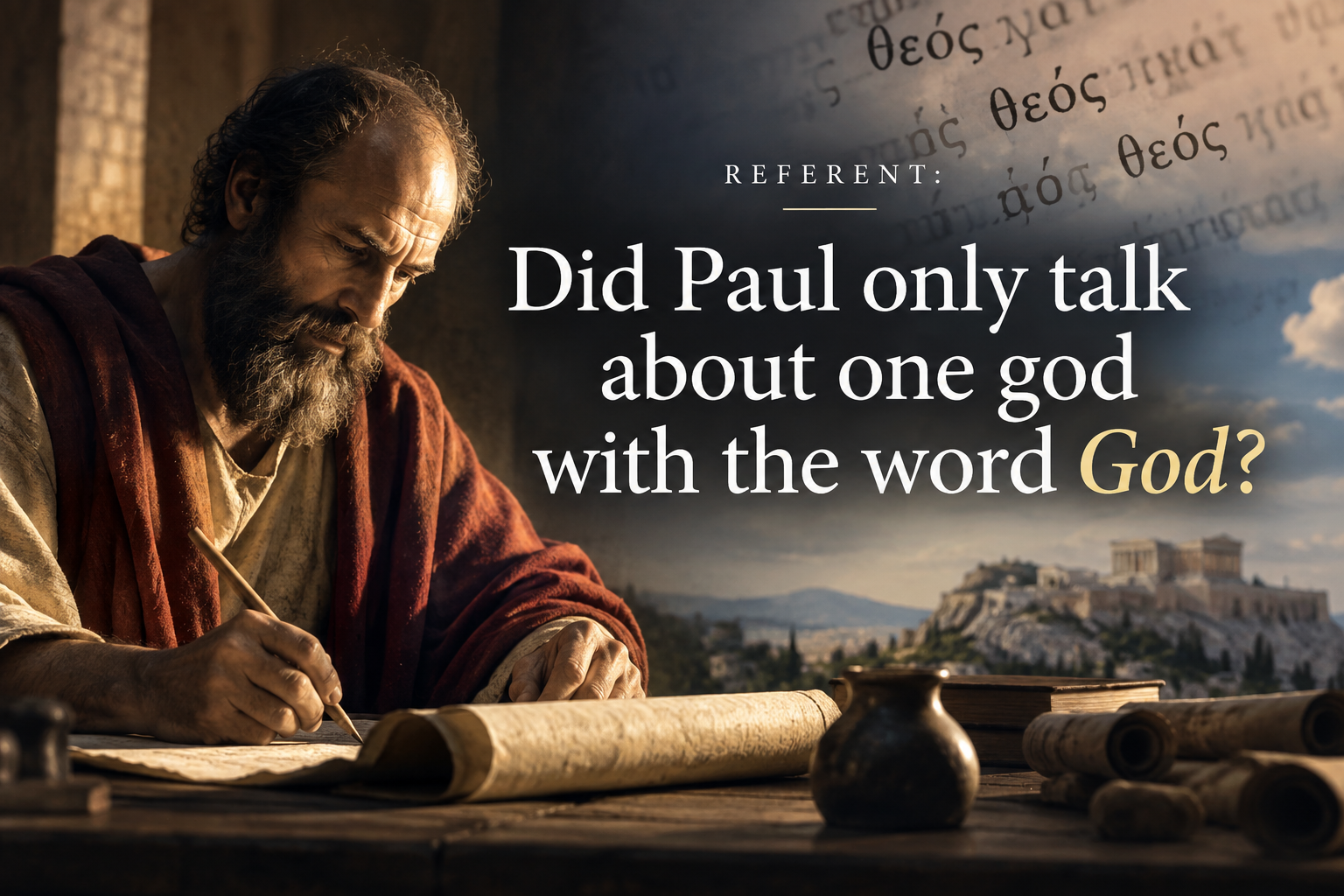 Referent: Did Paul Only Talk About One God With the word God?The word God is a title, not a name, and Paul uses it for more than one being. He applies it to the Father whom Christ disclosed, and he applies it to the god of this aeon who blinds minds so the Evangelion cannot reach them. Reading both as one voice forces you to explain why the Father would hide the light of His own Son. He does not. Paul is naming two referents.Oct 1
 Is the Creator Just?Marcionite teaching is often summarized in a single contrast: the Father is good, while the Creator is just. The first statement comes directly from the Evangelion. The second does not. The True Testament reserves goodness for the Father, calls the Law holy and its commandment just and good, but never calls the Creator himself just. The title comes from ancient reports about Cerdo and Marcion. Adolf von Harnack did not invent it, but he defended it and placed it within a Pauline-Lutheran contrast between Law and grace. This distinction matters. A commandment can be just without its giver being identified as the Just God. The True Testament presents the Creator through his rule over the present aeon, his Law, and an administration that kills, condemns, and blinds. Our own writing has sometimes compressed that evidence into the formula “the Creator is just.” That wording now requires correction.Oct 1
 Things That Differ: Aeonic DispensationalismC. R. Stam was right that Paul is not the Twelve and that large parts of the Christian Bible do not agree. Ordinary dispensationalism, Acts 2, mid-Acts, and Acts 28, keeps those differences by dating them from Acts and assigning them to one God on two schedules. That is where Stam stopped. This article does not. Paul dates his Evangelion from a revelation, not from Acts. The present time is the evil aeon, with a god who blinds, not a pause in Israel’s program. The Father sent His Son; he did not promote Israel’s Christ. There is no other Evangelion, and this aeon ends with the Lord, not with a restored nation. Things differ because they belong to different lords and different aeons.Aug 24
 Sexuality and the Two GodsA True Testament article on sexuality, straight, gay, married, single, and celibate. The Creator legislated the bedroom because His realm runs on flesh, lineage, and property. The Father does not. This article walks through what the Evangelion and ten letters actually say, and states where the Assembly stands.Jul 27
 Angels in the True Testament: Creator, Adversary, and the Father's ParousiaPopular religion has turned angels into pageant costumes and jewelry. The True Testament gives them a harder role. They are the Creator's agents, the mediators who delivered a Law that proves its own inferiority, and they belong to the order the Adversary rules. This article sets out what the eleven books actually say about angels, the Adversary, and the Father's parousia.Jul 16
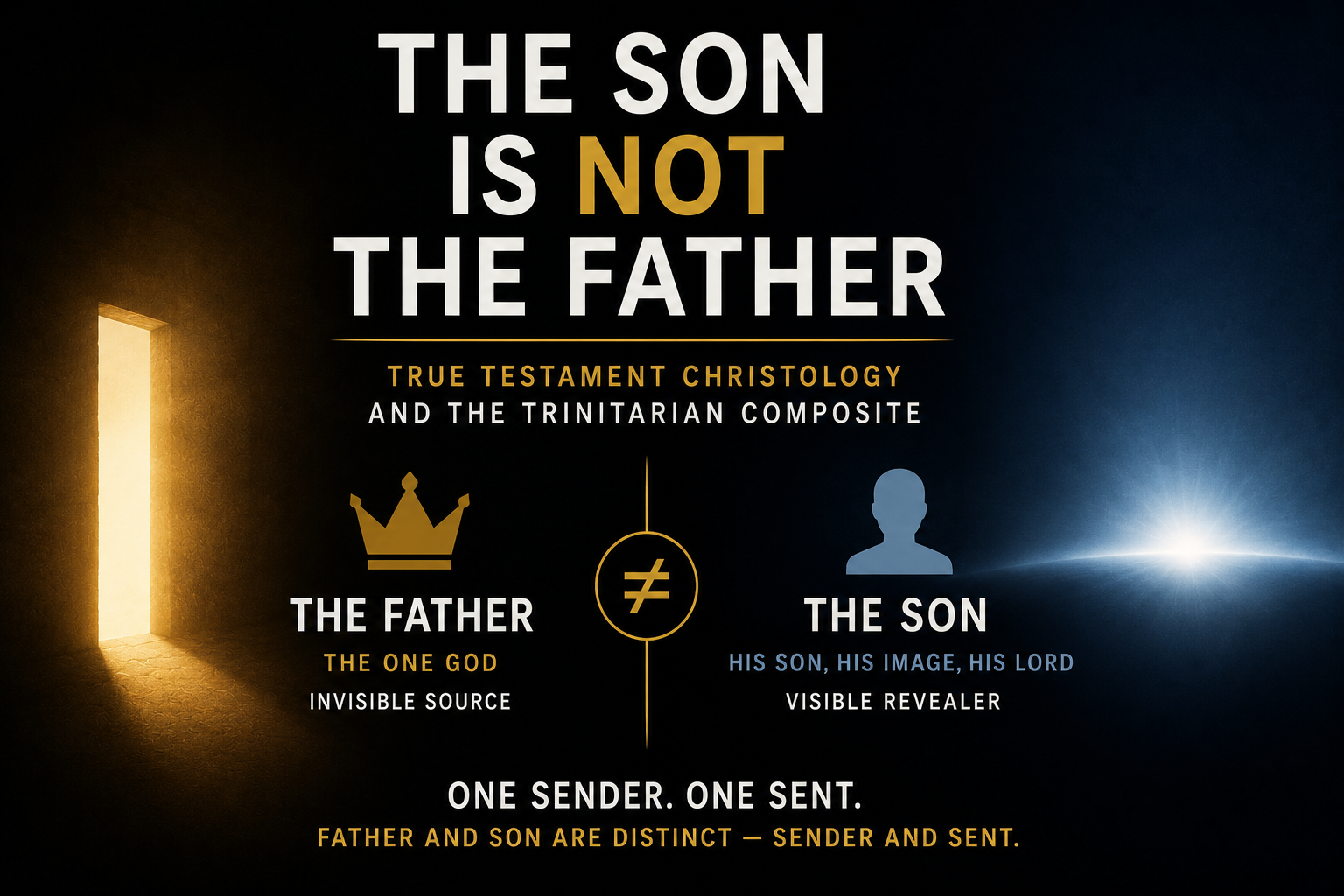 The Son Is Not the Father: True Testament Christology and the Trinitarian CompositeA sustained reading of the Evangelion and the Apostolikon on the identity of Christ. He never names himself God. He refuses even the predicate "good." He silences the titles shouted at him. He calls himself Son of Man. Paul keeps the line clean: one God, one Lord — distinct. The Trinity is a fourth-century orthodox composite that the True Testament does not teach.May 19