
The journal of the True Testament Assembly
Studies in Marcionite Christianity, Canon, and Origins. Edited by W. C. Muenchow IV
Topic
Rescue & Grace
14 articles, newest first
 Speaking in Tongues or Letting Go: The Pentecostal Baptism in the Holy Spirit and the Marcionite PossessionAround 2005, in the largest megachurch in Minneapolis, I watched evangelists like Rodney Howard-Browne and Creflo Dollar bring the charismatic revival to the altar. This article sets the Pentecostal baptism in the Holy Spirit, with tongues as its sign, beside what the True Testament Assembly calls possession: giving up control in prayer and letting the Father’s Spirit move. It compares what each teaches, what our text says, and what actually happens to you in each.Nov 18
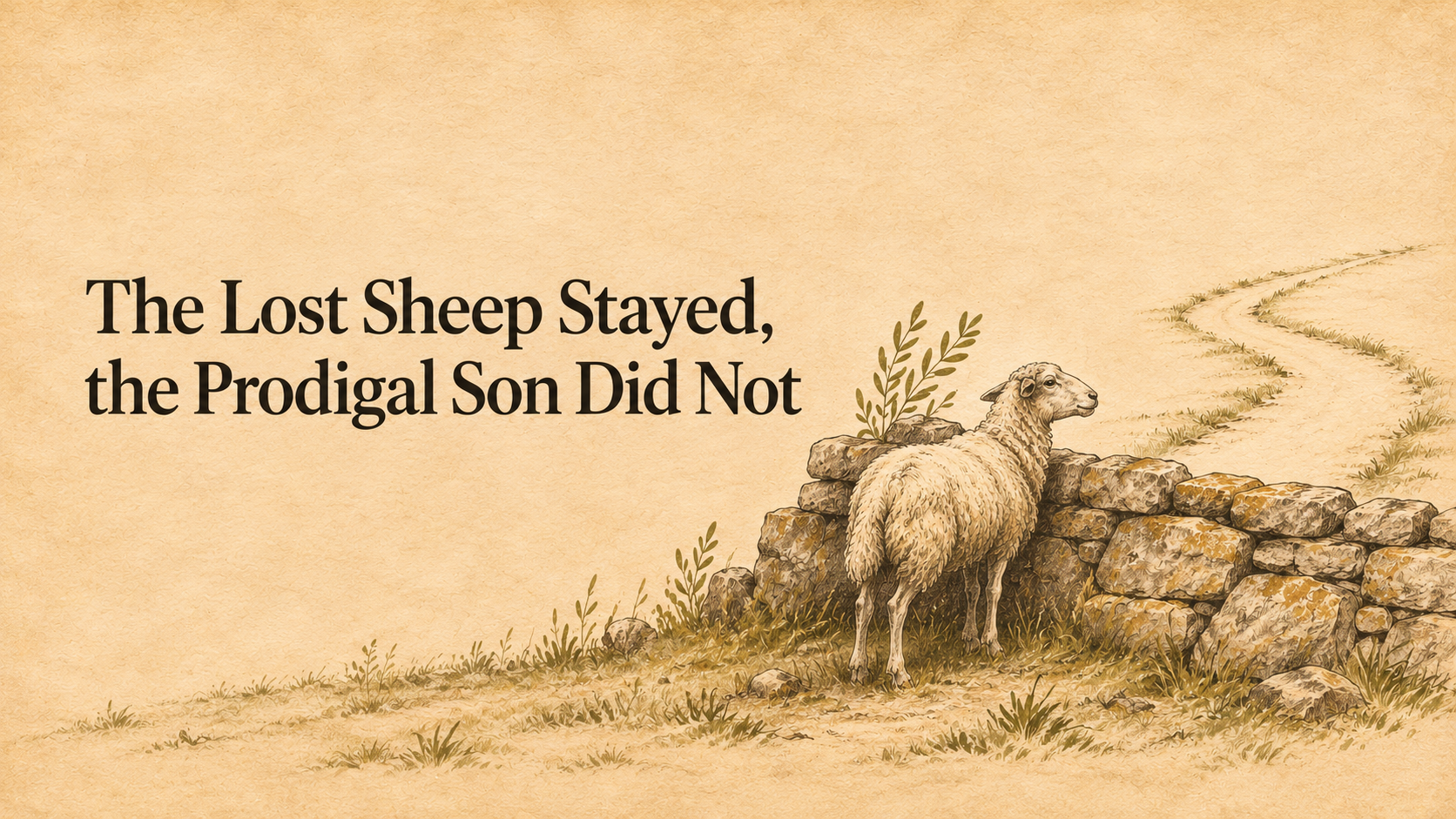 The Lost Sheep Stayed, the Prodigal Son Did NotThe best-loved parable in the church's Gospel was not in Marcion's. Tertullian answers the lost sheep and the lost coin, then passes over exactly the twenty-two verses Epiphanius reports missing. What our Evangelion keeps is a Father who goes out after the lost instead of waiting for them to come home.Nov 9
 Addicted to the LawMug shots of the local single mom on Facebook, courtroom TV all day, crime documentaries at the top of the charts, and a nation that locks up more of its people than any other democracy and has given criminal records to more than 70 million of them: people cannot stop watching someone else be accused. Paul's Law is the Law of Moses, but its work is the same, to stop every mouth and bring the world under accusation, and Paul shows how it multiplies the very thing it condemns. This article names that appetite for what it is, an addiction to the Law, and sets it beside the Pharisee who thanked God he was not like other people, the woman everyone knew, and the Son who was executed between two criminals and prayed for the people who put him there.Nov 7
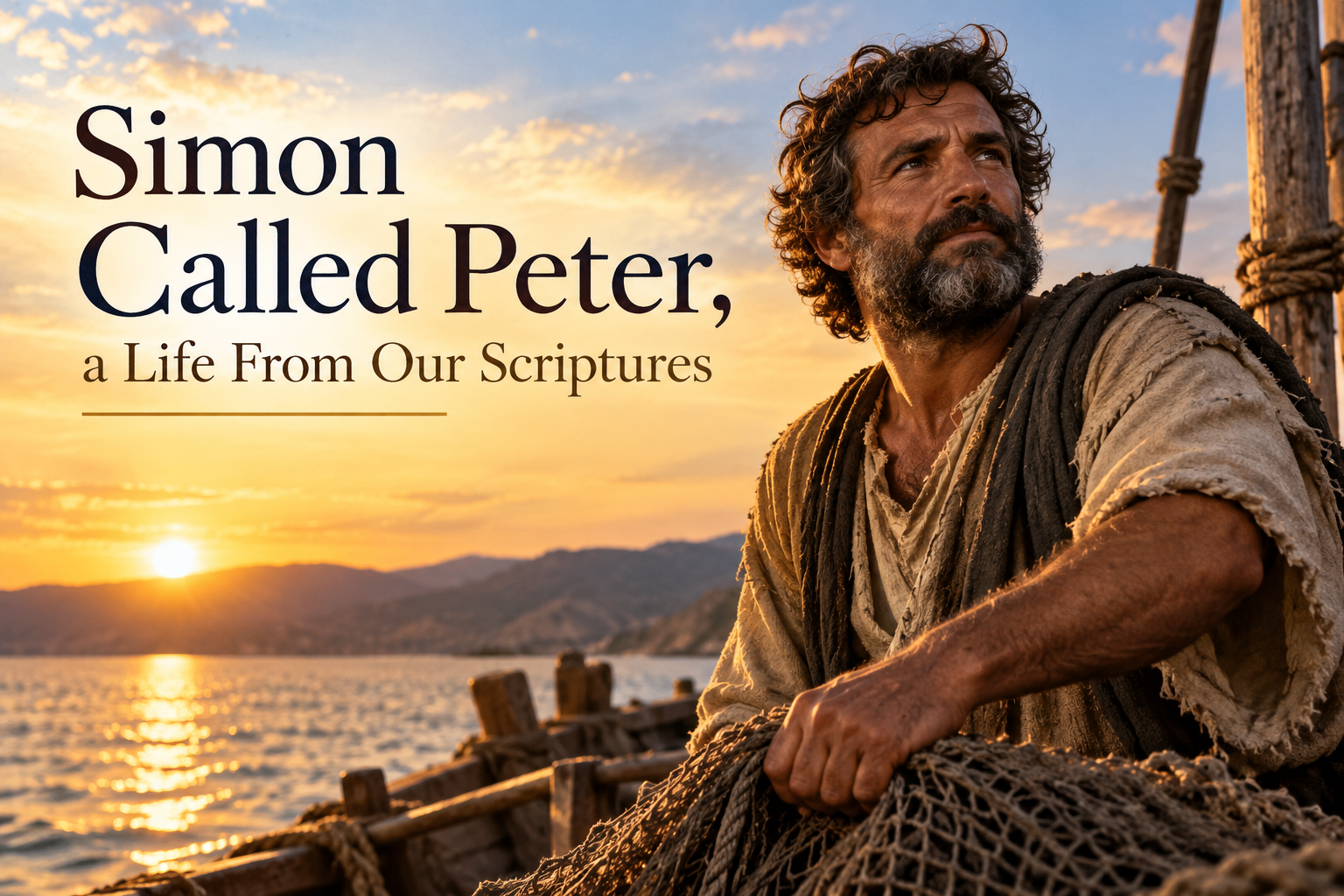 Simon Called Peter, a Life From Our ScripturesMost of what people believe about Peter comes from books outside our canon: the rock, the keys, the bishop of Rome. Read only the True Testament and a different man appears. He is a fisherman who knew he was a sinner, then sat in judgment on a sinful woman. He confessed Christ, wanted Moses and Elijah kept beside him, and denied him three times. Years later Paul found him at Antioch, still afraid of the men who kept the Law. Peter walked with Christ every day of the ministry, and he is the clearest proof in our scripture that being near Jesus is not the same as being rescued.Oct 30
 Further Clothed, the Soul, the Spirit and the World We Cannot SeeMost people picture the soul as something trapped inside the body, waiting to get out. The True Testament gives a different picture. The soul is you, alive. The Spirit is the Father's, not ours, and it comes from outside to take hold of the soul and carry it out of this order. Here is what the soul is, what the Spirit is, and how we walk in a world we cannot see.
We live in two worlds at once. One we can see, touch and measure. The other we cannot see at all, and yet everything that matters most to us happens there. Paul put it this way: "For we look not at the things that are seen, but at the things that are unseen; for the things that are seen are temporary, but the things that are unseen are aeonic." (2 Corinthians 4:18)
Our assembly teaches that the Father sends his Spirit to take hold of our soul and bring it up out of the Creator's domain. We have said it many times. What we have not done is stop and say what the soul is. What is it made of? Where is it? And when Paul speaks of a person's "spirit," does that mean we have two things inside us instead of one?
This article answers those questions from the True Testament. I think the answers are clearer than most people expect, and they change how we picture our own lives.Oct 26
 What the Creator Knows About The FatherThe Creator has never met the Father. No one has, except the Son and the people to whom the Son reveals him. So what does the god of this aeon know about the God who has been emptying his house for two thousand years? The text answers: he knows the damage. He knows something entered his domain that he did not send, that his rulers killed it and lost, that it did not stay dead, that a light is now shining that is not his, that his prisoners are being transferred out, and that his own clay is calling someone else Father from the inside. What he does not know is who. This is a personal piece, because I used to be one of the prisoners, and I have thought a long time about what the jailer learned on the day I left.Oct 16
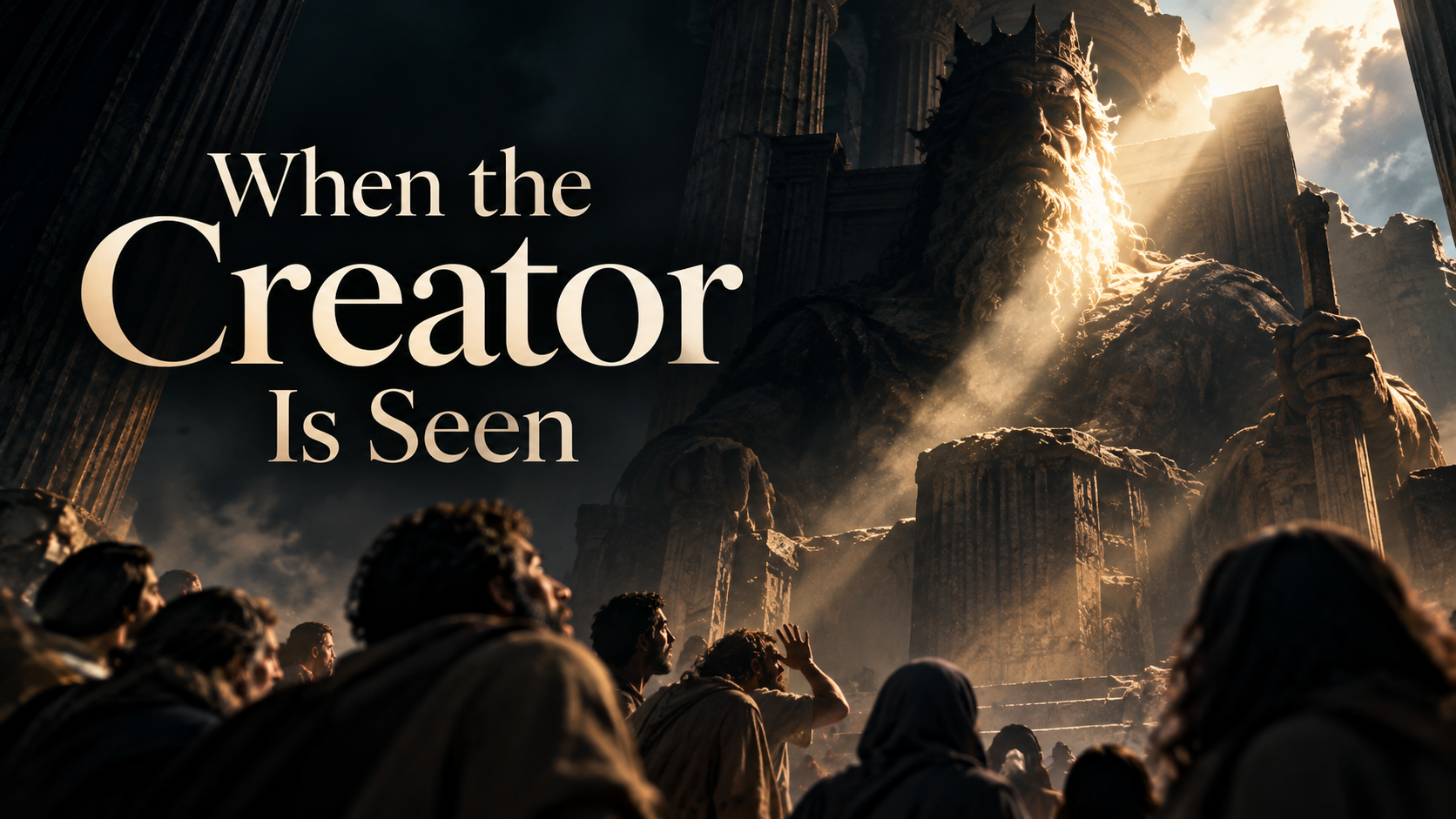 When the Creator Is SeenMost Christians picture the end as a series of arrivals: a rapture, a tribulation, an Antichrist, a throne in Jerusalem, a final sorting. Our end turns on something being seen. Paul says the god of this aeon has blinded minds so that the light of Christ might not shine, and the end is that blindness lifting. We hang the whole order on one event, the revealing of the person of fault, whom we hold to be the Creator. Christ is the image of the invisible God, and no one can recognize the Father’s image while the Creator still passes for the Father. So the false god must be seen before the true Son can be. This article walks through the order step by step: the blindness, the first crack, the defection, the revealing, the Son seen, the fire that makes every work manifest, the closing of the aeon, and the reconciliation of all things. It also draws on Tertullian, who reports that Marcion read the god of this aeon as the Creator.Oct 10
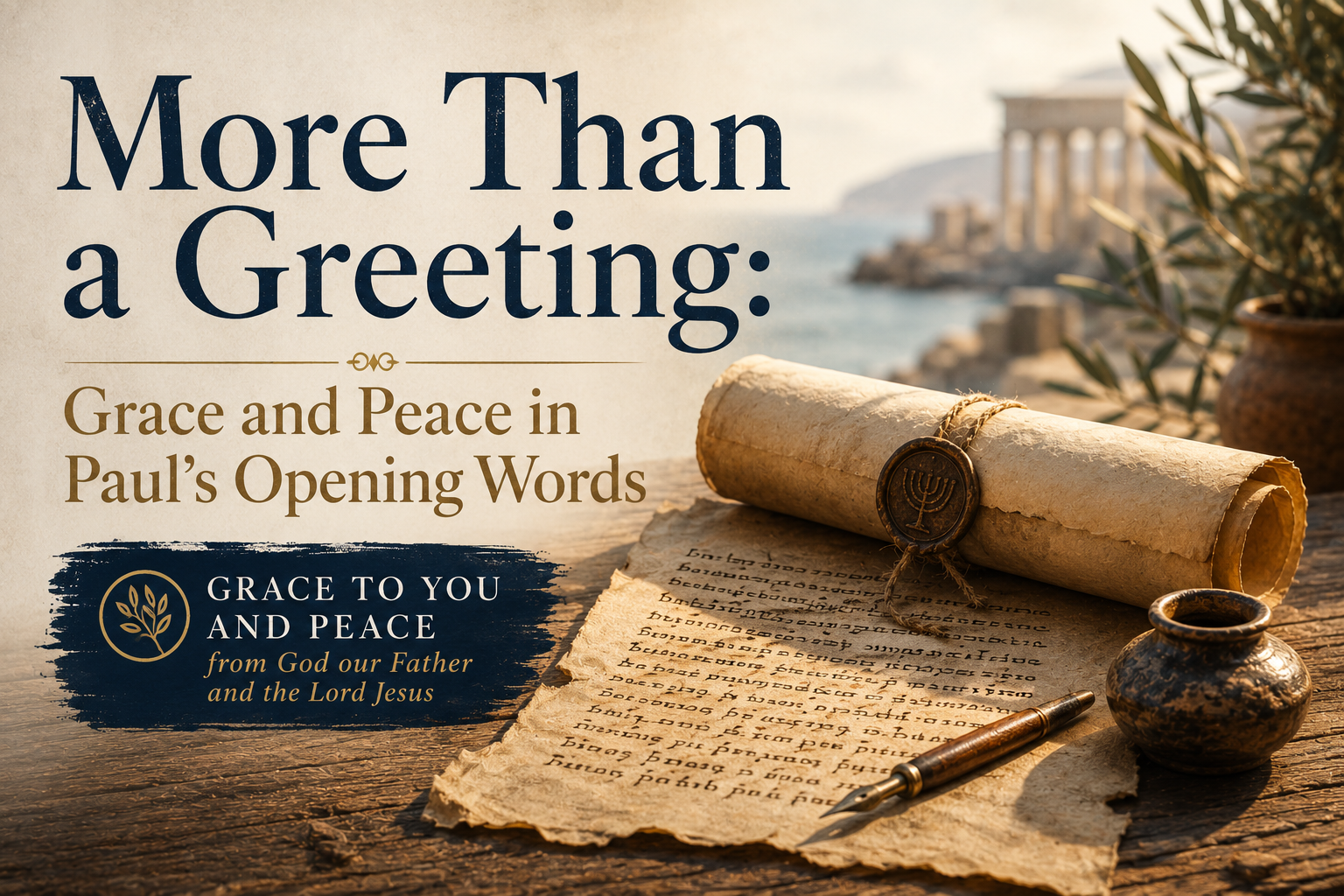 More Than a Greeting: Grace and Peace in Paul’s Opening WordsEvery letter in the Apostolikon opens with the language of grace and peace. Although Paul retains the recognizable structure of an ancient letter—sender, recipients, and greeting—he transforms the conventional greeting into a compressed statement of the Evangelion. Grace names the Father’s unearned action toward people who could not rescue themselves. Peace names the condition produced through Christ when the Creator’s Law, accusation, and dividing order no longer determine one’s standing. Before Paul corrects, teaches, warns, or requests anything, he places his readers inside grace and peace. These words are therefore more than polite wishes. They establish the theological atmosphere of the entire Pauline correspondence.Oct 1
 Things That Differ: Aeonic DispensationalismC. R. Stam was right that Paul is not the Twelve and that large parts of the Christian Bible do not agree. Ordinary dispensationalism, Acts 2, mid-Acts, and Acts 28, keeps those differences by dating them from Acts and assigning them to one God on two schedules. That is where Stam stopped. This article does not. Paul dates his Evangelion from a revelation, not from Acts. The present time is the evil aeon, with a god who blinds, not a pause in Israel’s program. The Father sent His Son; he did not promote Israel’s Christ. There is no other Evangelion, and this aeon ends with the Lord, not with a restored nation. Things differ because they belong to different lords and different aeons.Aug 24
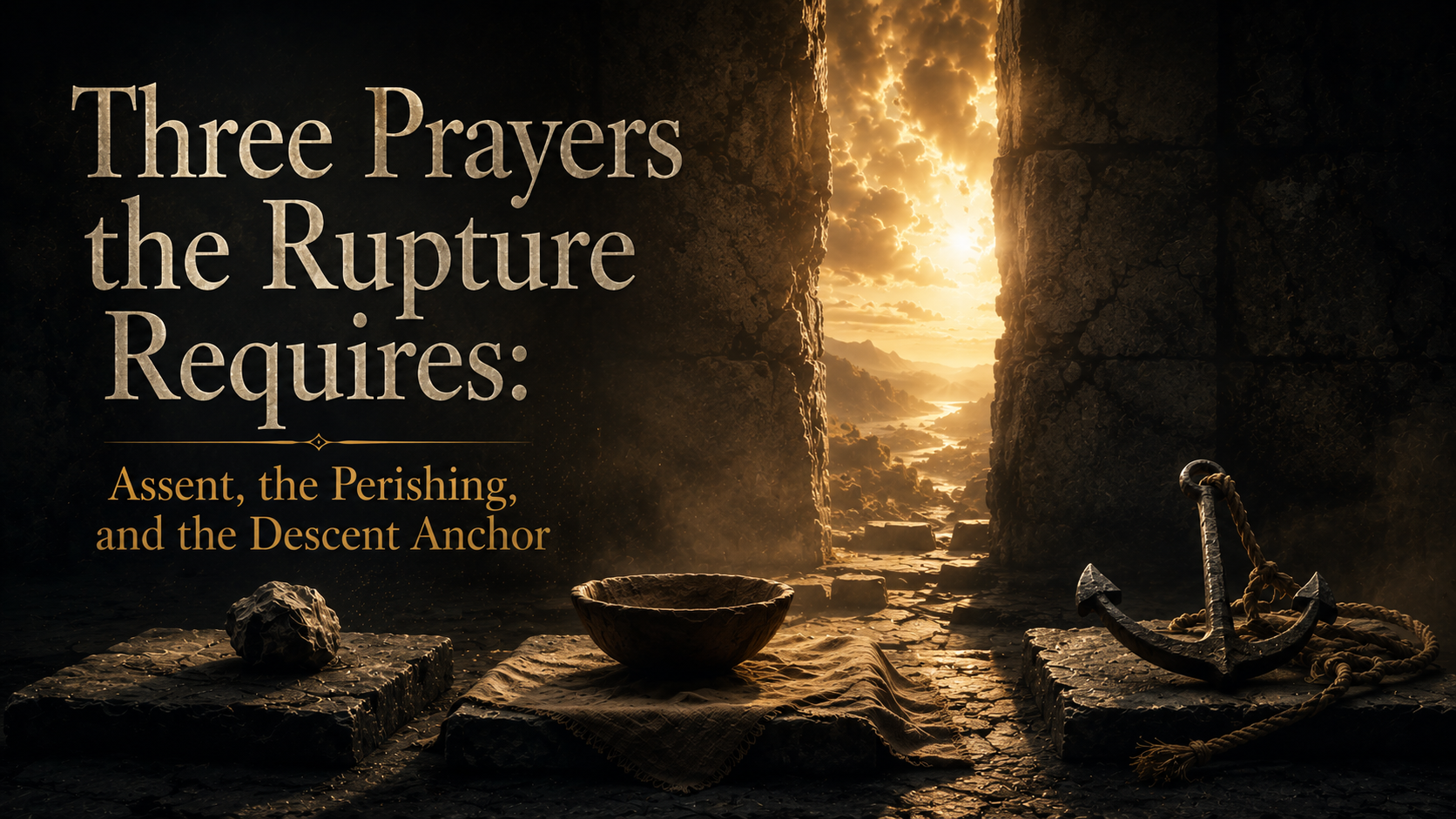 Three Prayers the Rupture Requires: Assent, the Perishing, and the Descent AnchorMost Christian prayer assumes one God, a working will, and a world worth improving. The True Testament assumes something else: two domains, a dead will, and a rescue that enters from outside. That assumption cannot stay in doctrine alone. It has to become something people do with their mouths shut, their grief named honestly, and their week oriented toward a Christ who did not grow up in the Creator's storyline. He descended into it.Jul 16
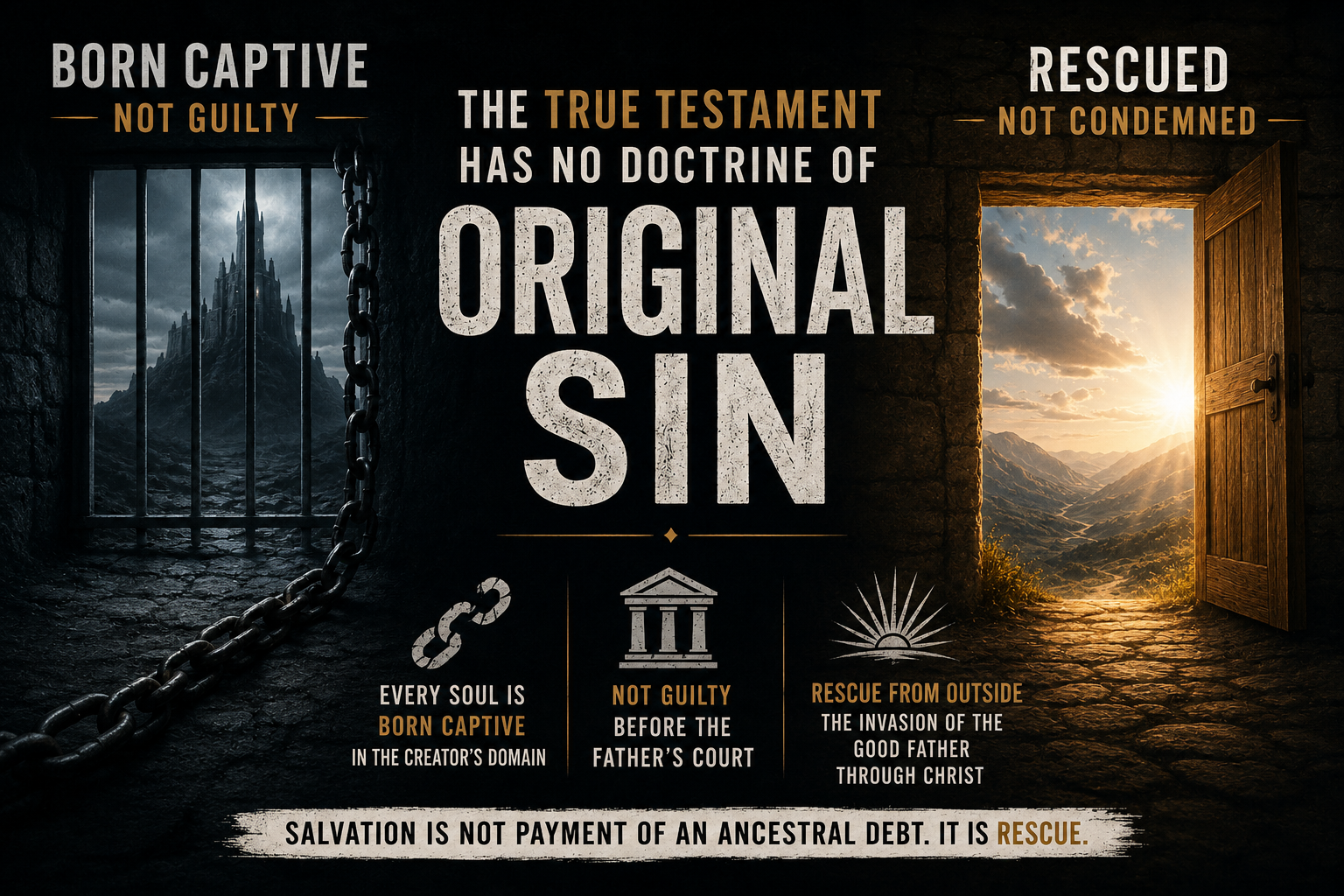 Born Captive, Not Guilty: The True Testament Has No Doctrine of Original SinAugustine's doctrine of inherited guilt rests on Romans 5:12–21 — a passage the True Testament does not carry. We hold a darker diagnosis than original sin and a freer verdict: every soul is born captive in the Creator's domain, not guilty before the Father's court, and the rescue is invasion from outside, not payment of an ancestral debit.May 19
 What It Means to Be PerishingPerishing is the most misunderstood word in Paul. It is not hell. It is not annihilation. It is not a verdict at the end of life. It is the present, ongoing condition of every soul born inside the Creator's decaying domain — and it is the condition the Father comes to end.May 19
 The Rescue of All Things: Why Marcionites Are Not Origen's UniversalistsModern universalism imagines everyone eventually loved into the Creator's kingdom. Origen imagined a great loop returning to the same God who broke it. The True Testament teaches something else entirely — a one-way extraction in which the Good Father empties the Creator's domain, reconciles every soul into his Aeon, and finally gathers even the Creator himself. It is not the usual universalism. It is rescue.May 11
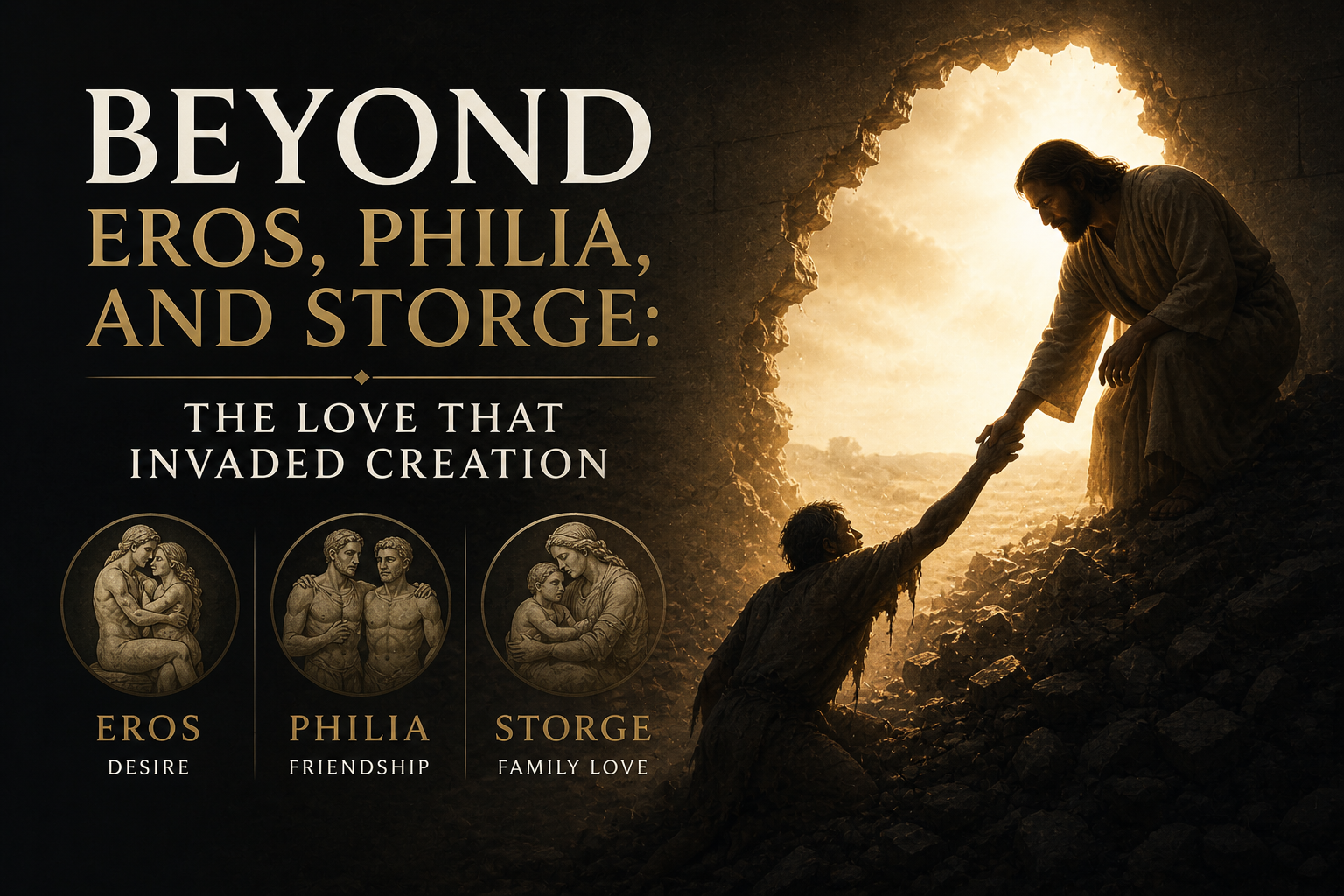 Beyond Eros, Philia, and Storge: The Love That Invaded CreationThe world calls many things love — romance, family loyalty, friendship. None of them are what Christ and the Good Father meant. This article examines the radical, alien love revealed in the True Testament: a love that gives without expectation, embraces enemies, and arrived uninvited from beyond creation itself.May 4