
The journal of the True Testament Assembly
Studies in Marcionite Christianity, Canon, and Origins. Edited by W. C. Muenchow IV
Topic
The Evangelion
13 articles, newest first
 The Critic Who Handed the Lord’s Prayer Back to Marcion: Inside Gustav Volkmar’s Marcion’s Gospel (1852)In 1852 a German schoolteacher named Gustav Volkmar set out to settle whether Marcion cut down the Gospel of Luke or whether the church’s Luke was an enlarged form of Marcion’s Gospel. He decided against Marcion. Yet the same careful critic concluded that at the opening of the Lord’s Prayer and in several other places, Marcion’s Gospel kept Luke’s original wording. This is a guide to his book, now in our Library in English.Nov 21
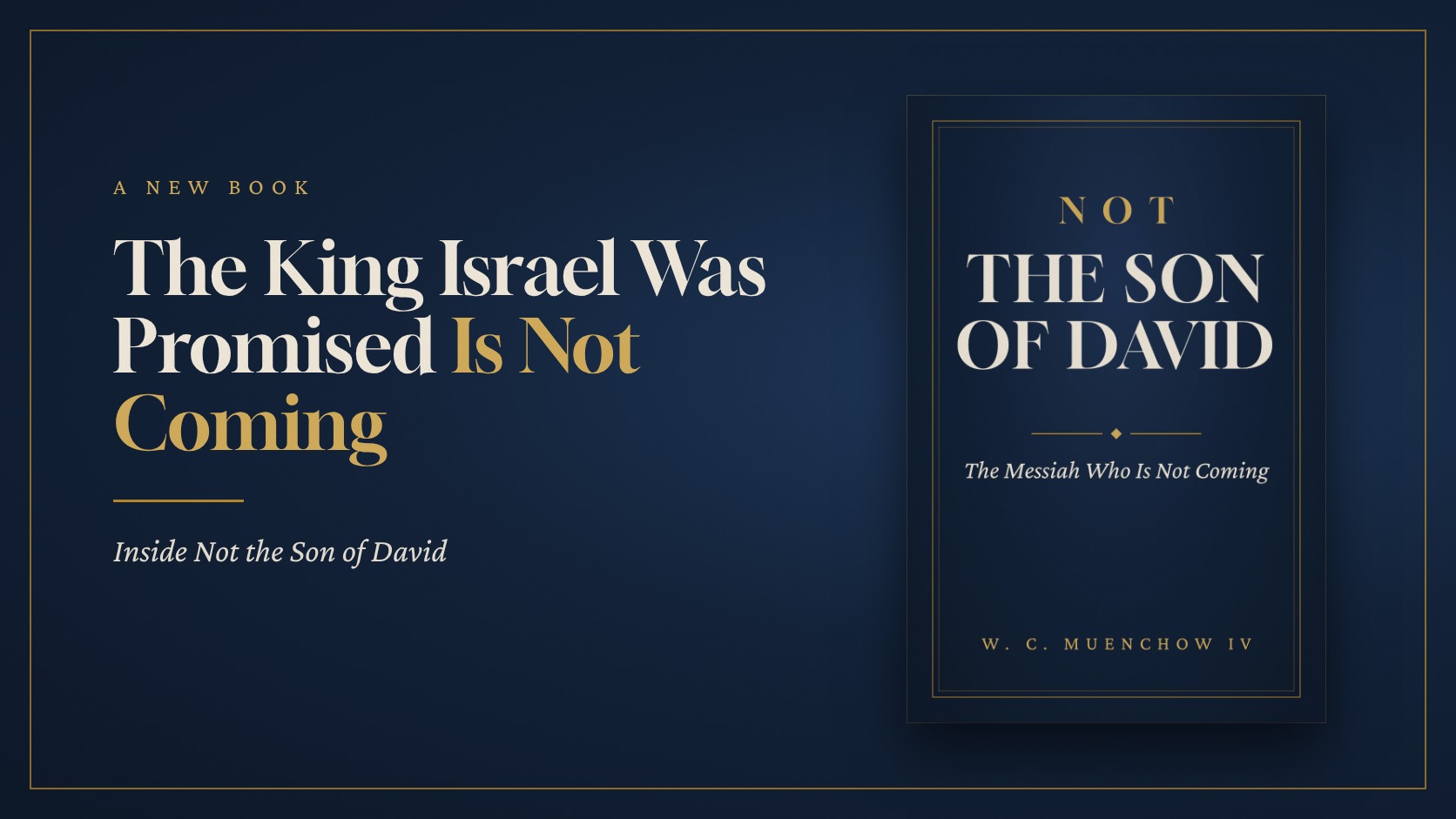 The King Israel Was Promised Is Not Coming: Inside Our New Book, Not the Son of DavidOur new book, Not the Son of David: The Messiah Who Is Not Coming, argues that Jesus was never the king the prophets promised Israel, and that the king they promised is not coming. This is a guide to its case: the title Jesus kept refusing, the five reasons drawn from Jesus and Paul, the church’s strongest replies, and what it all means for Israel and for you.Nov 17
 The Lost Sheep Stayed, the Prodigal Son Did NotThe best-loved parable in the church's Gospel was not in Marcion's. Tertullian answers the lost sheep and the lost coin, then passes over exactly the twenty-two verses Epiphanius reports missing. What our Evangelion keeps is a Father who goes out after the lost instead of waiting for them to come home.Nov 9
 The Pigs That Never Ran Off the CliffOur Evangelion tells the story of the man possessed by Legion, but it ends when the demons are given permission to enter the pigs. The herd never runs into the lake. Here is what the True Testament has, what Tertullian and Epiphanius say, how Hahn, Zahn, Harnack and the modern editors judged the missing verses, and what we can and cannot claim from them.Oct 31
 Simon Called Peter, a Life From Our ScripturesMost of what people believe about Peter comes from books outside our canon: the rock, the keys, the bishop of Rome. Read only the True Testament and a different man appears. He is a fisherman who knew he was a sinner, then sat in judgment on a sinful woman. He confessed Christ, wanted Moses and Elijah kept beside him, and denied him three times. Years later Paul found him at Antioch, still afraid of the men who kept the Law. Peter walked with Christ every day of the ministry, and he is the clearest proof in our scripture that being near Jesus is not the same as being rescued.Oct 30
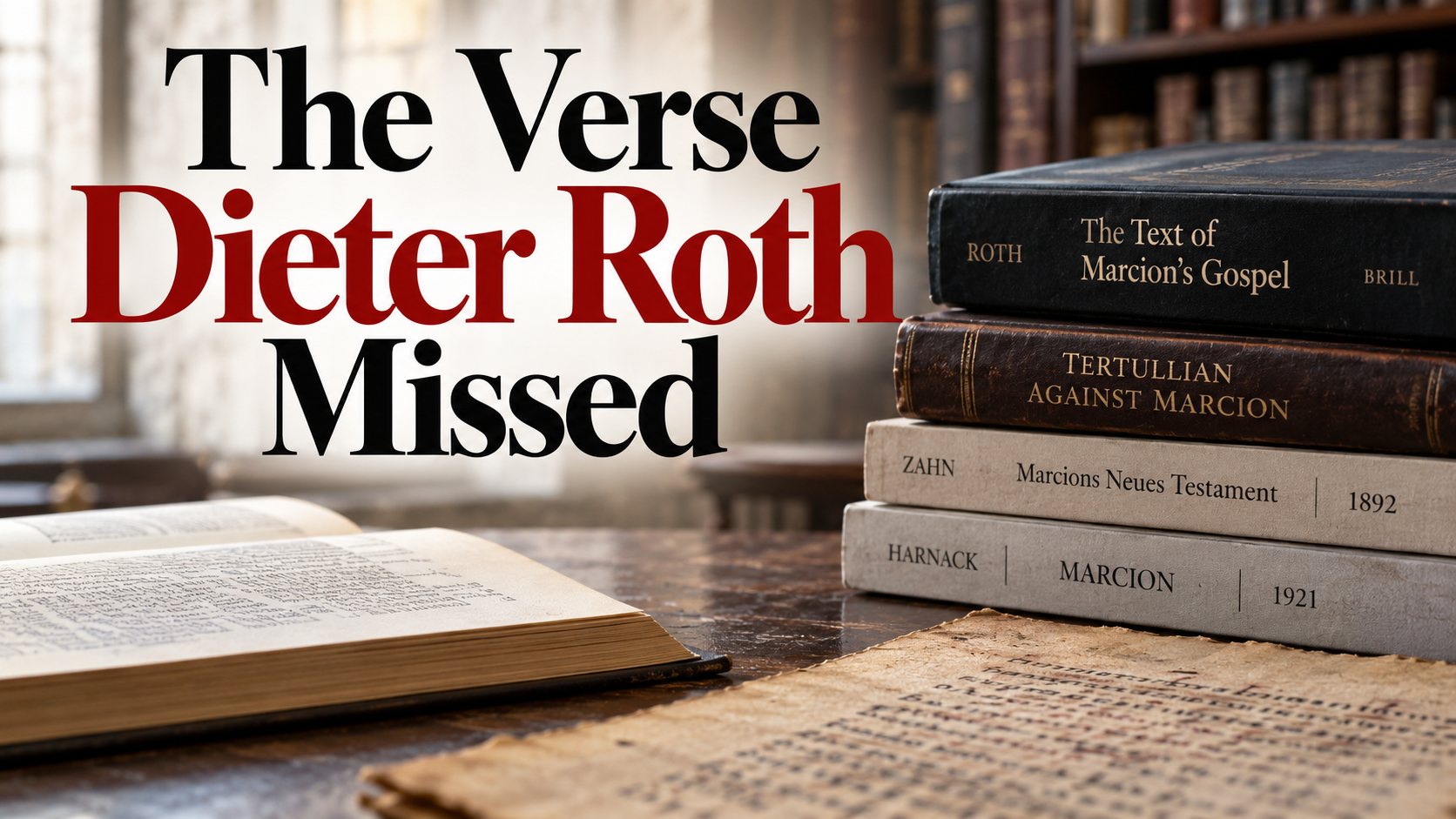 The Verse Dieter Roth MissedDieter Roth's The Text of Marcion's Gospel (Brill, 2015) is the most careful reconstruction of Marcion's Evangelion ever made, and the one English-speaking scholars now cite as standard. For Luke 19:12, the nobleman's journey to claim a kingship, his verdict is one word: "Unattested." But Tertullian attests the verse, in a sentence of Against Marcion that Roth himself quotes for a different purpose and even footnotes as an allusion to this very parable. The evidence sat in plain sight for a long time. Zahn passed over it in 1892, Harnack in 1921, and the clause has been rendered in the English of Luke 19:12 since 1868. This article sets out the sentence, shows what it attests, answers the objections, and adds a short list of smaller faults found while checking. It ends by correcting our own edition's apparatus on the same point, because the error we are describing is one we half made ourselves.Oct 20
 The Emmaus Road Without MosesIn canonical Luke, the risen Jesus walks the Emmaus road, opens Moses and the prophets, and shows two disciples that the scriptures were about him. The whole habit of finding Christ in the Old Testament rests on that scene. The Evangelion has the road, the stranger, the rebuke and the broken bread, but no Moses and no prophets. Jesus calls them slow of heart “to trust all that he told you” (Evangelion 16:22 TT) and holds them to his own words about his suffering. This article sets the two texts side by side and shows what Tertullian’s quotation of the passage reveals. It then traces how the True Testament, from the synagogue at Nazara to the last command and Paul’s own summary in 1 Corinthians 15, never presents Jesus as fulfilling the Creator’s books.Oct 9
 Marcion Did Not Write the Evangelion: An Answer to Markus VinzentMarkus Vinzent has done more than any living scholar to put Marcion back at the start of the gospel story. In Marcion and the Dating of the Synoptic Gospels (2014) and the books that followed, he argues that the Evangelion came before Matthew, Mark, Luke, and John, and that those four were written in reaction to it. We agree with him on both points. He also argues that Marcion wrote the Evangelion. We don’t agree with that, and the disagreement matters. Oct 3
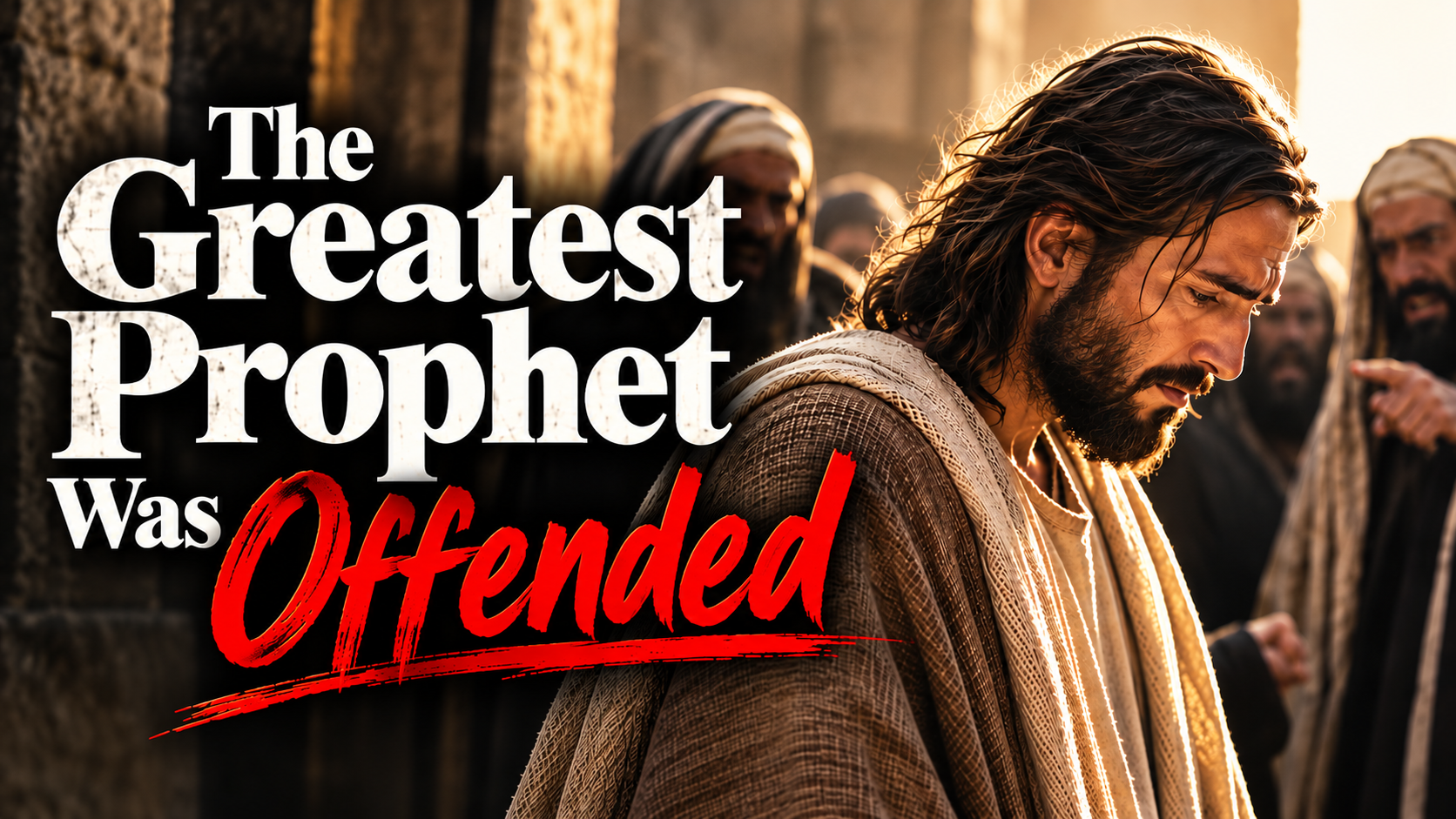 John Was Offended: What the Evangelion Says That Luke Does NotThe Evangelion says something about John the Immerser that the Imperial Church’s gospels do not say. When the news of Christ’s works reached him, “he was offended” (Evangelion 4:14 TT). The warning that follows is addressed to him by name: “Fortunate is John if he doesn’t stumble over me” (Evangelion 4:16a TT).
This article sets out where those two readings come from, who disputes them, and why we print them. It goes with the sermon The Greatest Prophet Was Offended, and it carries the evidence the sermon had no room for.Oct 2
 Did Jesus Focus on the Family?This article challenges the modern Christian idea that Jesus came to strengthen the traditional family as a central religious institution. Drawing from the Evangelion and Paul, it argues that Christ repeatedly placed allegiance to the Father above blood, marriage, inheritance, household duty, and earthly citizenship. Rather than presenting the family as the center of the gospel, the article portrays it as part of the Creator’s present order—while the true family of the Father is formed through revelation, adoption, and those who hear and follow Christ.Oct 1
 The Evangelion and the Gospel of JohnJohn is the canonical gospel most often thrown at Marcionites. Read carefully, it is the clearest evidence that orthodox editors fused the Creator with the Father — the exact merger the Evangelion refuses.Jul 15
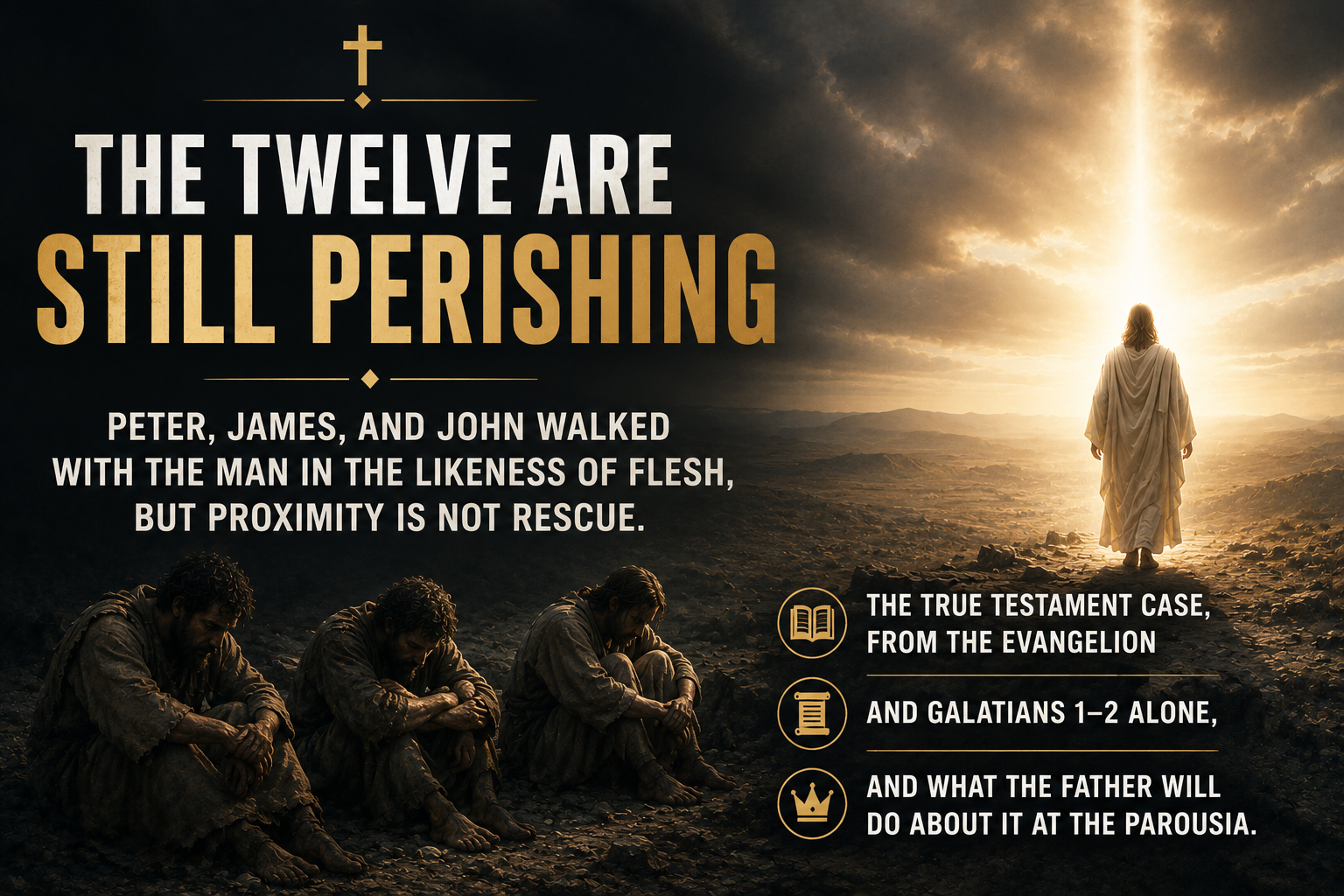 The Twelve Are Still PerishingPeter, James, and John walked with the man in the likeness of flesh, but proximity is not rescue. The True Testament case, from the Evangelion and Galatians 1–2 alone, that the Twelve are still perishing in the Creator's domain — and what the Father will do about it at the parousia.May 12
 No Womb, No Bloodline: The True Testament Case Against the Biological ChristThe True Testament contains no birth narrative, no genealogy, and no biological mother. Christ appeared — descending from the Unknown Father in the likeness of flesh, not through ordinary generation. Every claim of a mother or brothers is either an external assertion he rejected or an orthodox forgery designed to chain him to the Creator's material lineage.May 2