
The journal of the True Testament Assembly
Studies in Marcionite Christianity, Canon, and Origins. Edited by W. C. Muenchow IV
Topic
Assembly History
10 articles, newest first
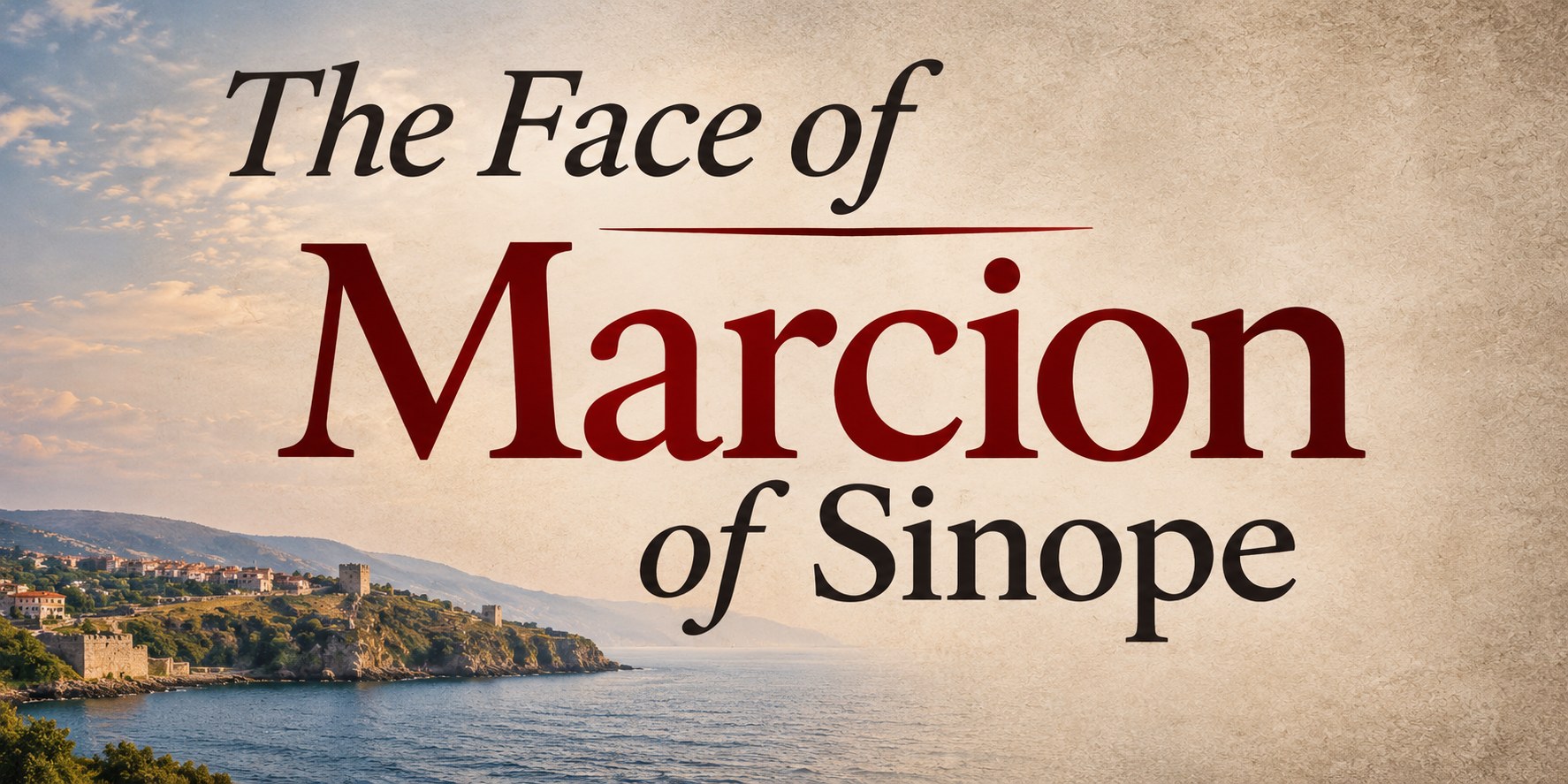 The Face of Marcion of SinopeNo likeness of Marcion survives, and the manuscript picture usually shown as him is most likely someone else. We built a portrait from the evidence instead: what his opponents let slip about his trade, wealth and age, the shipowners of his own city, the fashion of his day, Ephrem’s sackcloth and the genetic studies, with every feature graded by how sure it is.Nov 11
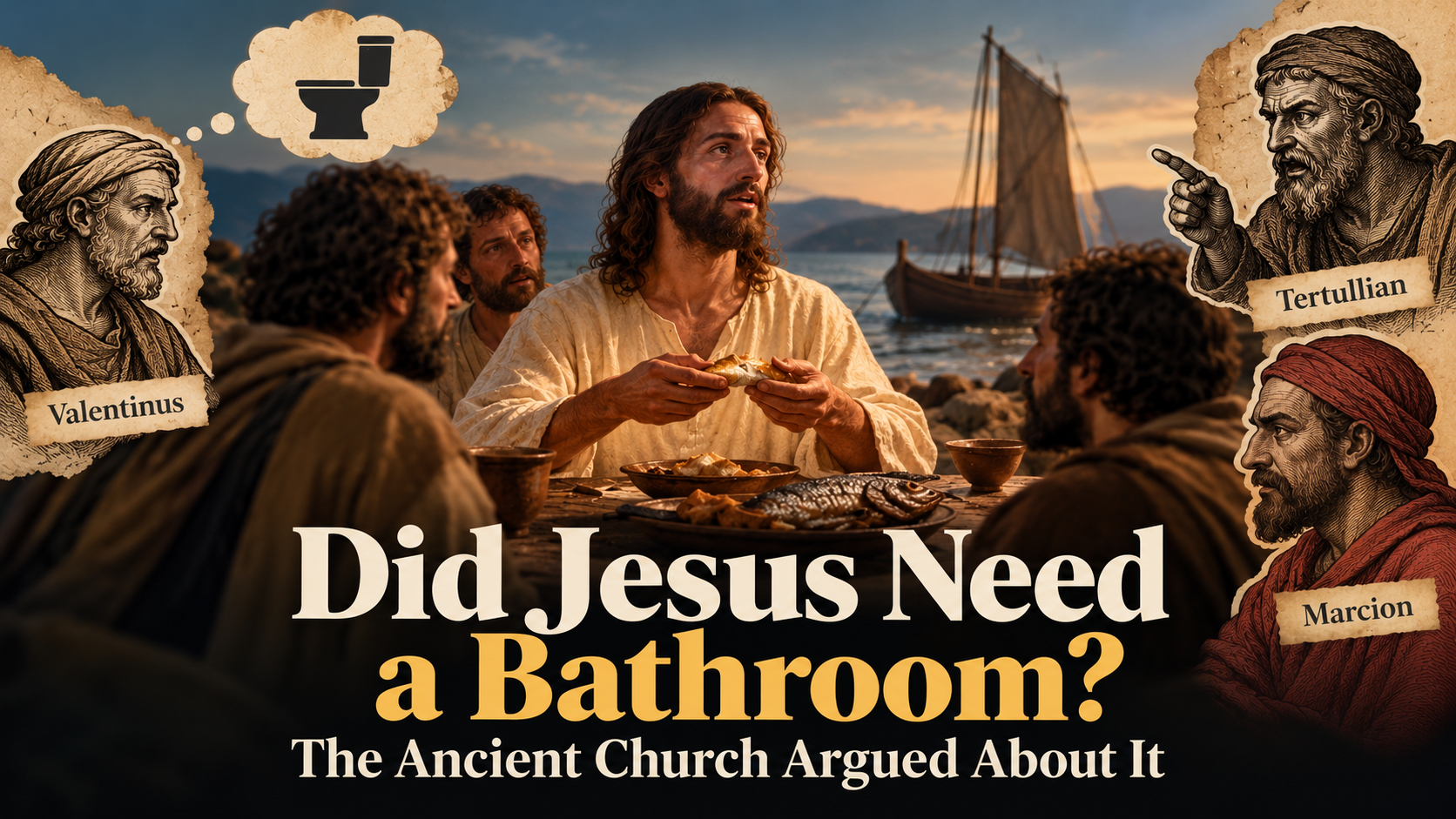 Did Jesus Need a Bathroom? The Ancient Church Argued About ItIn the second century, Christian teachers argued about whether Jesus needed a bathroom. Valentinus said no: Jesus ate and drank, but the food never passed out of him, because nothing in him could decay. Tertullian reports that the Marcionites called human flesh “stuffed with dung,” and he aimed his strongest ridicule at their disgust with birth. Marcion’s own Gospel answers the question with a meal. Jesus eats at tables and sleeps in a boat, and after he rises he asks for food and eats broiled fish in front of his disciples. Tertullian confirms that scene stood in Marcion’s text. Our position is that Christ was not born, but his body was real. He did not come from the Creator’s machinery of birth, and he did not pretend to be above the life of a body.Oct 23
 The Witness for the Defense: What Epiphanius's Own Notebook Shows About Marcion's BibleEpiphanius accused Marcion of mutilating Scripture, but his own notebook of 118 passages from Marcion’s Bible tells against him. He calls most of them true and unaltered and admits his charges of tampering do “no harm.” The German scholars reject his one charge of a changed word, and his final argument rests on a Gospel Marcion never had. Read whole, the church’s star witness testifies for the defense.Oct 22
 The Books Nobody TranslatedBetween 1846 and 1923, five German scholars, Ritschl, Baur, Zahn and Harnack (twice), wrote the most detailed studies of Marcion’s Bible ever produced. None reached English in full until 2026, after waits of 103 to 180 years. This article traces why, and finds no conspiracy, only a run of ordinary decisions pointing the same way. Ritschl withdrew his thesis and Baur revised his. Zahn and Harnack declared the question closed. Publishers paid for the books churches used, so Tertullian’s attack on Marcion was in English by 1868, while the scholars who tested his charge stayed in German. Specialists were expected to read German, the Tübingen name became a warning, and Harnack’s call to drop the Old Testament from the canon was overshadowed by the 1933 rally that demanded the same thing in cruder terms. English writers then learned the German debate from summaries that got it wrong. Now the books can be read.Oct 10
 How Did the Apostle Paul Die?How did the apostle Paul die? The True Testament shows Paul's own letters never describe his death. The Roman beheading story is later tradition, not scripture.Oct 1
 Marcionism — And the Scholars Who FlinchedMarcionism is the structural opposite of antisemitism. The split is theological — two gods, two covenants, two aeons — never two peoples. The Evangelion's passion narrative cannot produce a Christ-killer libel, and the modern scholarly flinch that softens Christ's descent out of fear of being called antisemitic gets the argument exactly backward.Aug 24
 What Is a Marcionite? The Marks of a People the Creator Did Not KeepMost writing about us is a list of denials. A people cannot be defined by the accusations it has survived, so here is the direct answer. A Marcionite is not an ethnicity, a denomination, or a rite. It is a confession: there are two Gods and only one is good, the good one did not make this world and was unknown until Christ disclosed Him, eleven books carry that disclosure, and we belong to the good one.Jul 28
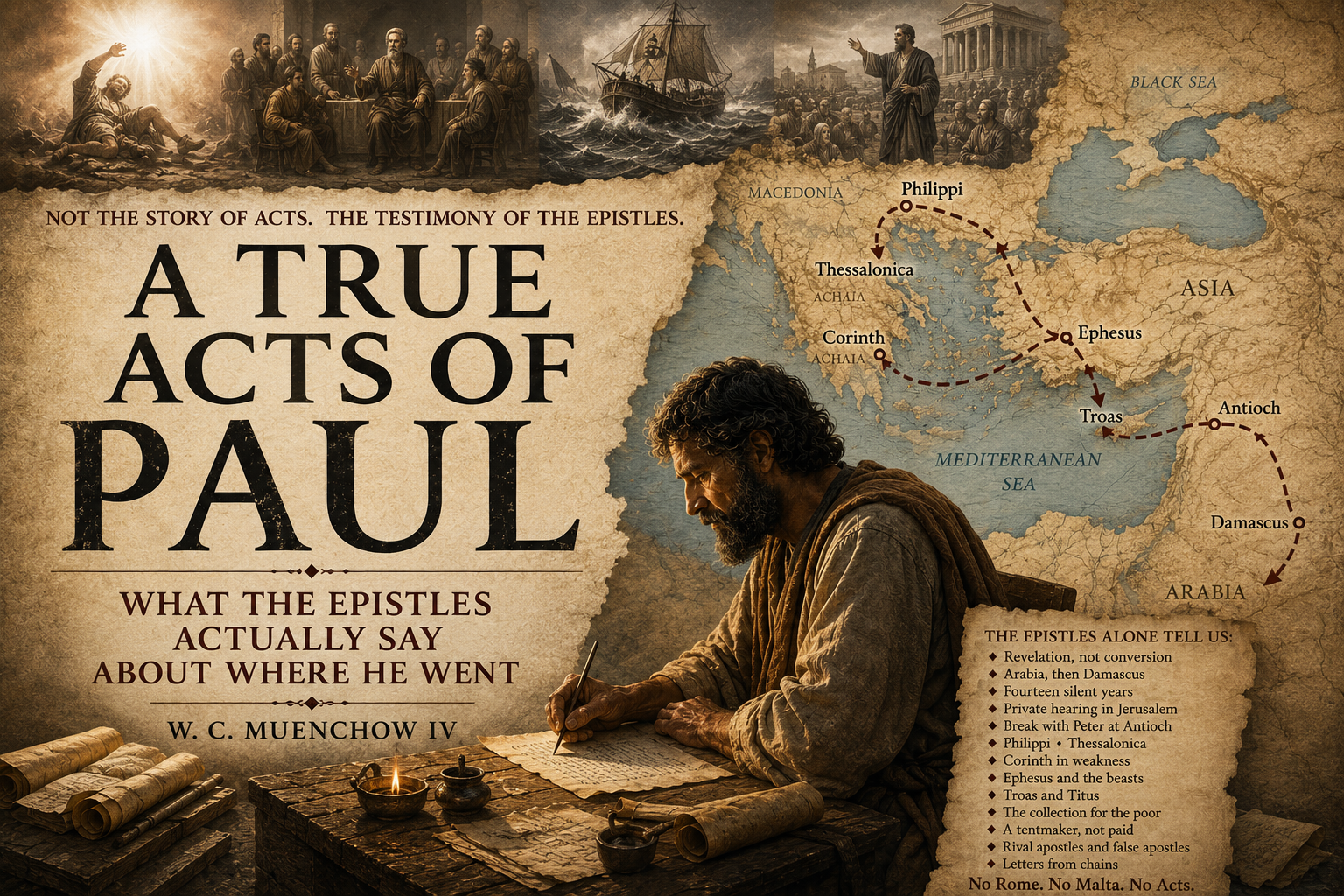 A True Acts of Paul: What the Epistles Actually Say About Where He WentA sober reconstruction of where Paul actually went and what he actually did, drawn only from the True Testament epistles we hold — without leaning on the book of Acts or the Pastorals, and without citing verses that the orthodox editors later inserted into the letters themselves.Jun 23
 The History of Marcion and the Marcionite AssembliesFrom Sinope to Rome in 144 AD, into Syria, Persia, Armenia, the Paulicians, Bogomils, and Cathars, through the modern academic recovery, and into the True Testament Assembly today.Jun 20
 We Are Not Gnostics: Why Marcionism Is Not, and Has Never Been, GnosticismFor nearly two thousand years, Marcionites have been filed under "Gnostic" by heresy-hunters who could not be bothered to read us. The label is wrong. We have no Pleroma, no thirty Aeons, no Sophia myth, no caste of pneumatics, no salvation by secret knowledge. We have faith in a Good Father who rescues without a curriculum.May 12