
The journal of the True Testament Assembly
Studies in Marcionite Christianity, Canon, and Origins. Edited by W. C. Muenchow IV
Topic
Life & Ethics
11 articles, newest first
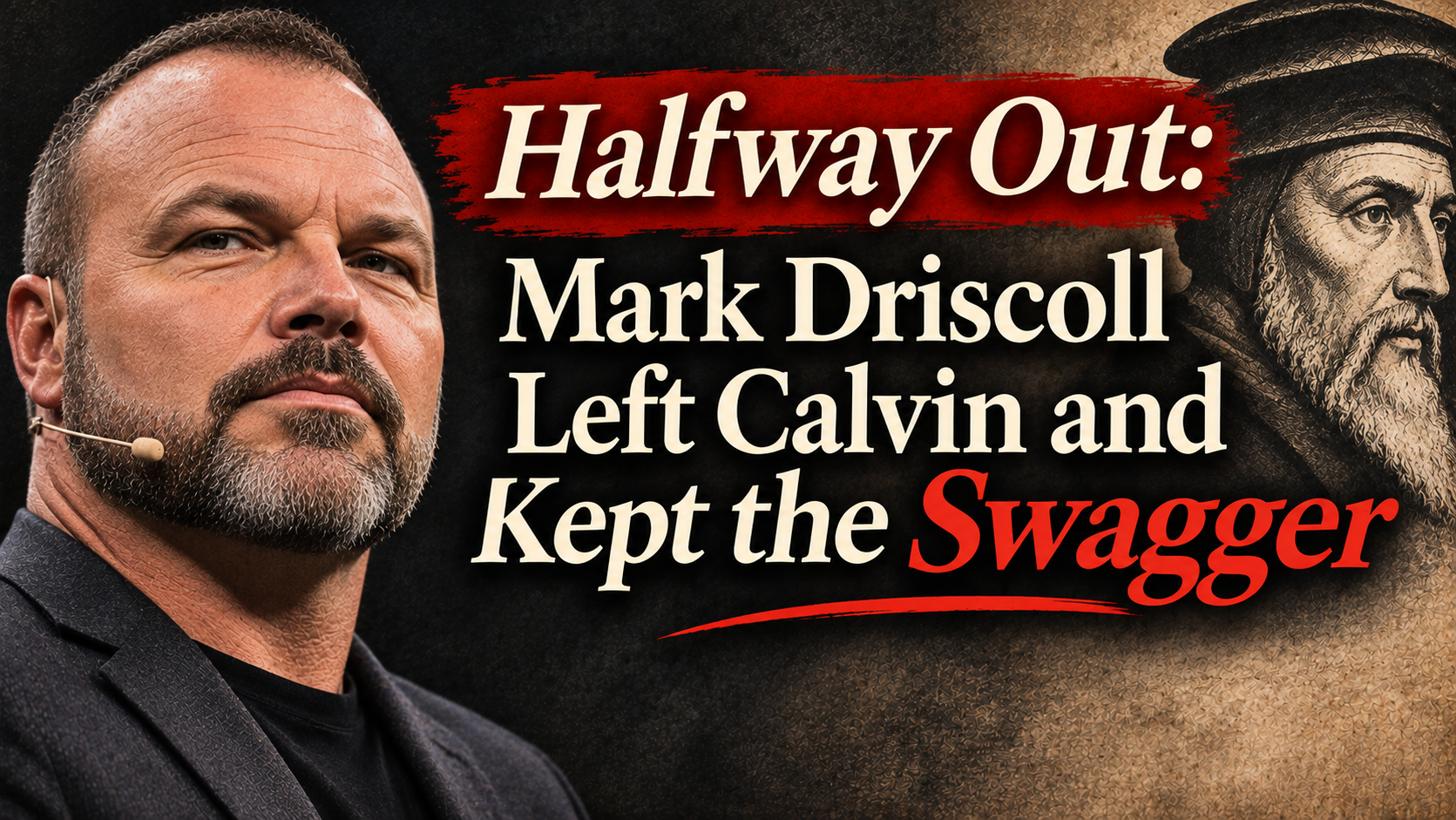 Halfway Out: Mark Driscoll Left Calvin and Kept the SwaggerIn 2019 Mark Driscoll called the five points of Calvinism garbage, and on God he moved closer to us than to Calvin. But he kept his picture of a man. We checked his verses for men against our canon: some are there, the sharpest are not, and the ones that remain ask for something he does not preach.Nov 10
 Addicted to the LawMug shots of the local single mom on Facebook, courtroom TV all day, crime documentaries at the top of the charts, and a nation that locks up more of its people than any other democracy and has given criminal records to more than 70 million of them: people cannot stop watching someone else be accused. Paul's Law is the Law of Moses, but its work is the same, to stop every mouth and bring the world under accusation, and Paul shows how it multiplies the very thing it condemns. This article names that appetite for what it is, an addiction to the Law, and sets it beside the Pharisee who thanked God he was not like other people, the woman everyone knew, and the Son who was executed between two criminals and prayed for the people who put him there.Nov 7
 Learning to Hear: Why Theology Is Like MusicPeople look at the study of theology and see something dry, the way a page of sheet music looks dry to someone who never learned to read it. Karl Barth called theology “a peculiarly beautiful discipline,” and he heard it the way he heard Mozart. Here is why the study of theology is like learning music: the scales, the theory, the score, the ear and the performance.Oct 28
 Does the Good Father Really Bless Your Country?In country after country, speeches end by asking God to bless the nation, and anthems ask him to save it. The prayer sounds harmless, and the people who say it usually mean it kindly. But it assumes something about God that the Evangelion does not teach. Blessing a nation for its obedience, guarding its borders and healing its land is the Creator's covenant, and the Hebrew scriptures teach it openly. The Father whom Jesus revealed does something else. He is kind to people in every nation, including the ones at war with yours, and he gives his kingdom to a little flock that belongs to no country at all. This article sets the two side by side and asks what a Marcionite should pray instead.Oct 20
 The Creator's Signature: What Marcionites Say About Creation and EvolutionThe True Testament contains no creation account. The word "creation" appears in our scripture only for the Father's work in a person, and our Colossians never names Christ as the maker of all things; Tertullian himself says Marcion's god "created nothing." The world was made by the Creator, the god of this aeon, and Genesis is his own book about his own work. We read it with interest and without obligation, so the fight between a young earth and an old one is a quarrel inside the Creator's house that we are not party to. Evolution threatens nothing we hold and confirms what Paul said: the Creator's order is sown in decay and passing away, built on a system in which mass death is the price of operation. Death before Adam is no scandal to us, because Adam in our scripture is shorthand for the perishing material order. Darwin described the Creator's signature. Humans are animals of this house, wholly the Creator's work with no divine spark in them, until the Spirit is given from outside the aeon. We do not call the world evil, we do not hate it, and we do not treat science as an enemy. The Father does not repair any of it. His only creation is the new creation in a person, and his rescue is extraction, not renovation. The Imperial Church has to explain how a good Father built a world on billions of years of death. We never said he did.Oct 7
 Did Jesus Focus on the Family?This article challenges the modern Christian idea that Jesus came to strengthen the traditional family as a central religious institution. Drawing from the Evangelion and Paul, it argues that Christ repeatedly placed allegiance to the Father above blood, marriage, inheritance, household duty, and earthly citizenship. Rather than presenting the family as the center of the gospel, the article portrays it as part of the Creator’s present order—while the true family of the Father is formed through revelation, adoption, and those who hear and follow Christ.Oct 1
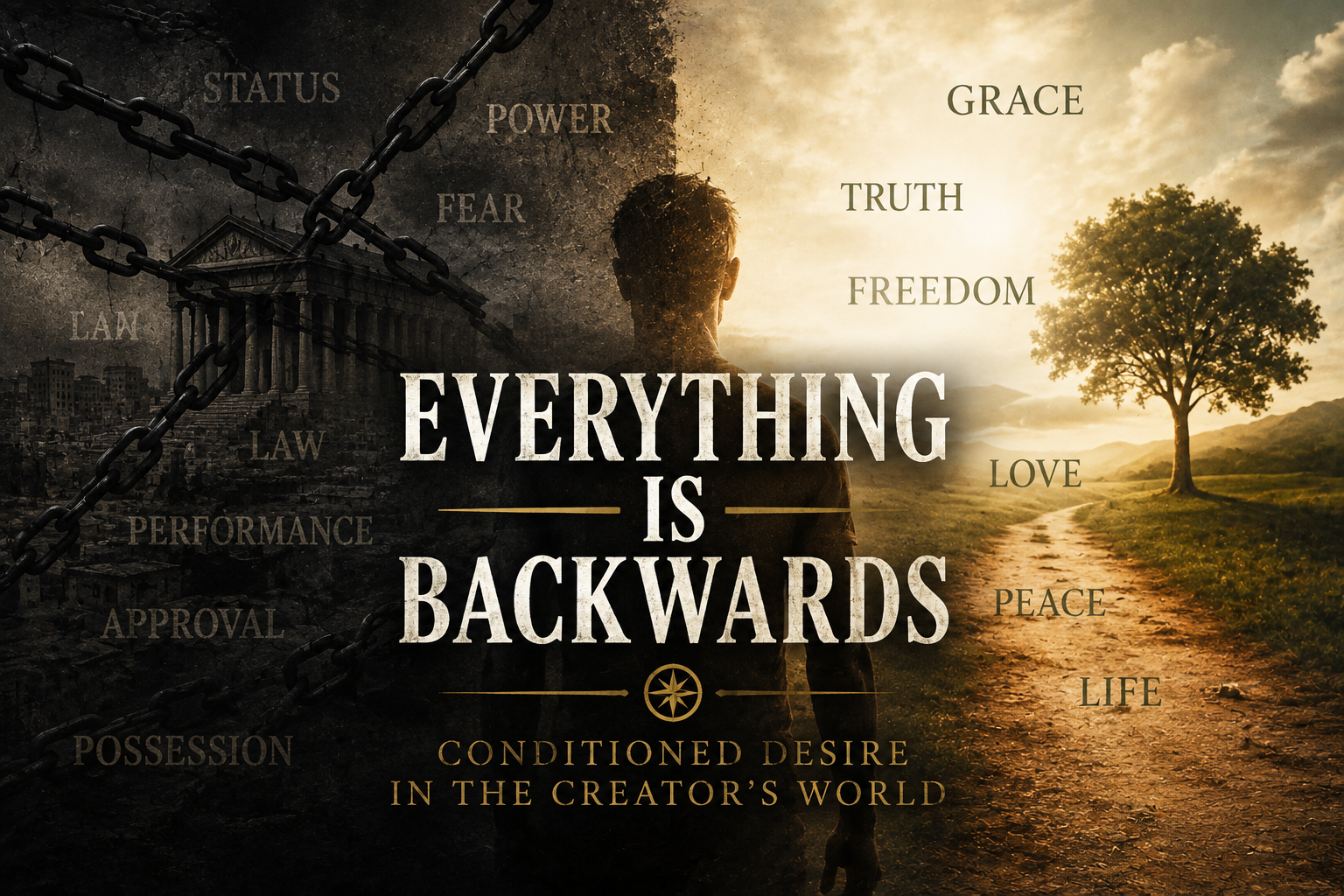 Everything Is Backwards: Conditioned Desire in the Creator’s WorldHuman beings do not enter the world as neutral observers. We are born inside an order that has already defined strength, success, justice, freedom, and desire for us. Paul describes this condition as enslavement under the elements of the world, walking under the ruler of the power of the air, and blindness imposed by the god of this aeon. We may resent the suffering this order produces while continuing to desire its rewards, because its values reached us before we possessed the language to question them. The Father does not correct this condition by helping us succeed within the Creator’s system. He sends His Son to deliver us from the present evil aeon and His Spirit to establish a new relationship within us. This article examines the reversals that follow: weakness reveals power, apparent foolishness discloses wisdom, grace replaces achievement, and love replaces domination. Everything appears backwards because the Father did not create this world and does not share its values.
All scripture quotations and references in this article are from the True Testament.Oct 1
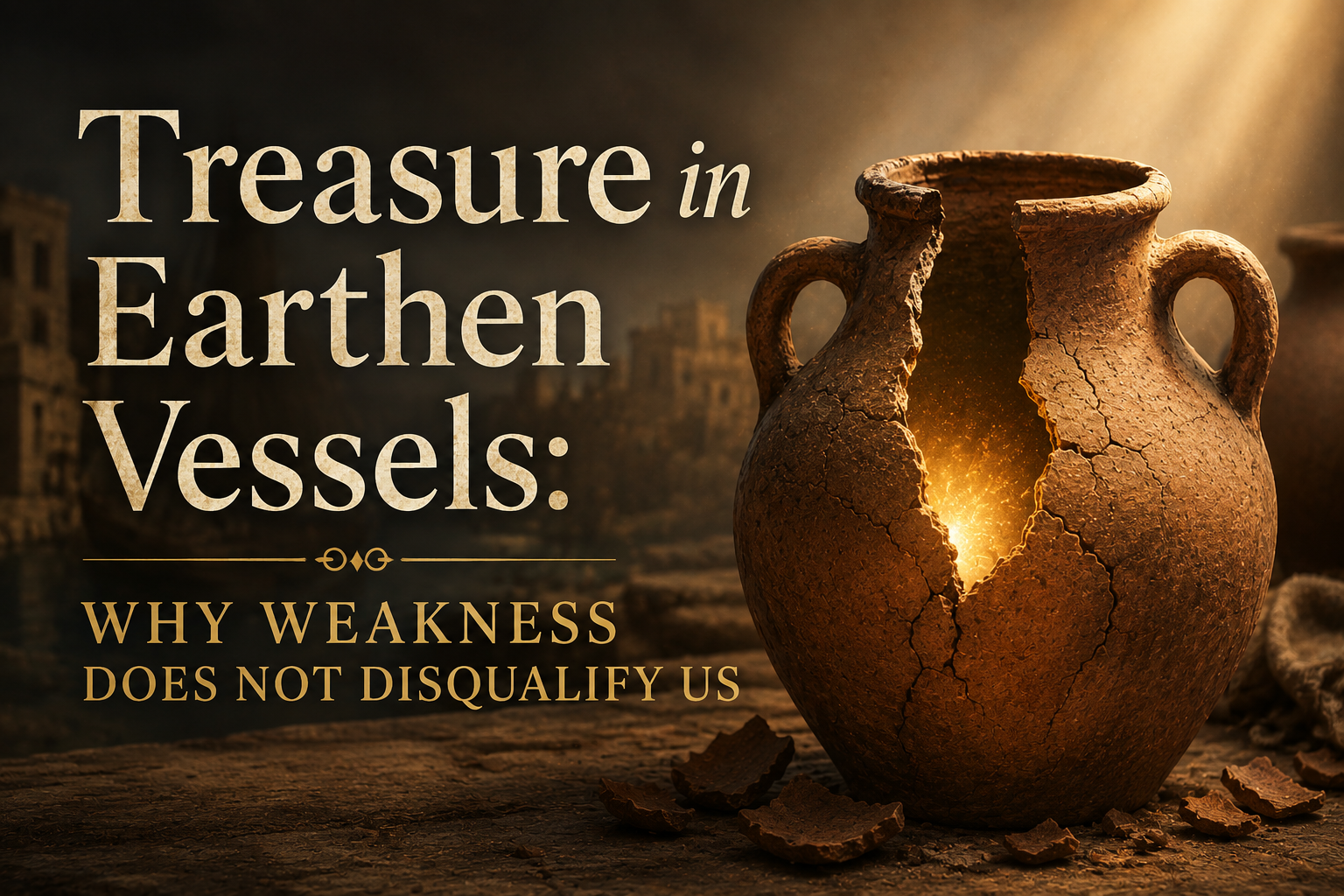 Treasure in Earthen Vessels: Why Weakness Does Not Disqualify UsPaul’s image of treasure carried in earthen vessels offers a theology of human limitation without shame. Drawing upon the ordinary place of pottery in the Roman world, this article reads 2 Corinthians 4 within its immediate literary setting and alongside Paul’s teaching on comfort and weakness. The vessel is fragile, but it is neither useless nor rejected. Its limitations ensure that the power manifested through it cannot be mistaken for its own. Paul therefore presents weakness not as a qualification for abandonment but as the place where the Father’s sustaining power becomes unmistakable.Aug 29
 What Is a Marcionite? The Marks of a People the Creator Did Not KeepMost writing about us is a list of denials. A people cannot be defined by the accusations it has survived, so here is the direct answer. A Marcionite is not an ethnicity, a denomination, or a rite. It is a confession: there are two Gods and only one is good, the good one did not make this world and was unknown until Christ disclosed Him, eleven books carry that disclosure, and we belong to the good one.Jul 28
 Sexuality and the Two GodsA True Testament article on sexuality, straight, gay, married, single, and celibate. The Creator legislated the bedroom because His realm runs on flesh, lineage, and property. The Father does not. This article walks through what the Evangelion and ten letters actually say, and states where the Assembly stands.Jul 27
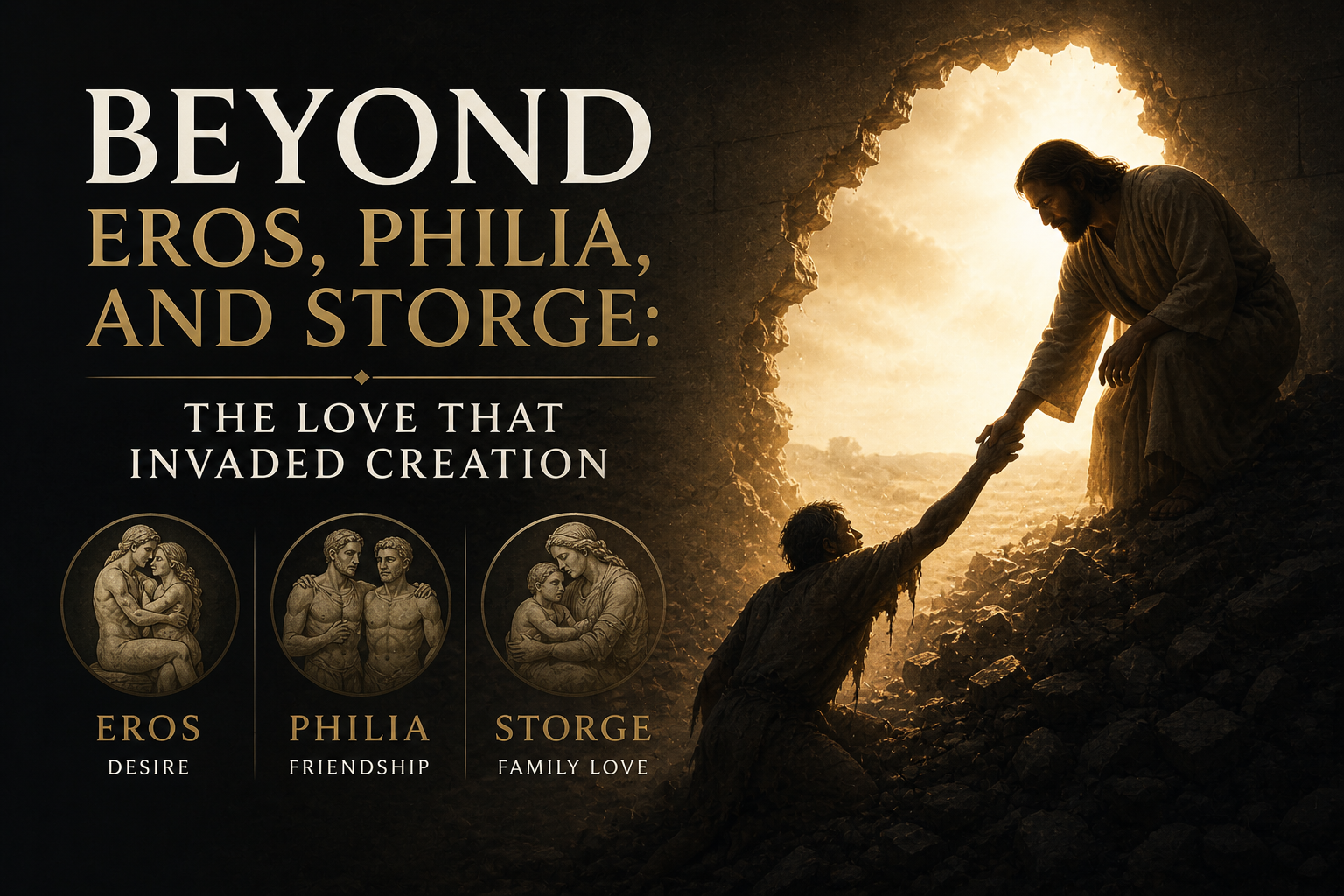 Beyond Eros, Philia, and Storge: The Love That Invaded CreationThe world calls many things love — romance, family loyalty, friendship. None of them are what Christ and the Good Father meant. This article examines the radical, alien love revealed in the True Testament: a love that gives without expectation, embraces enemies, and arrived uninvited from beyond creation itself.May 4